Ketone rule
The carbonyl carbon is bonded to two carbon groups.
This distinguishes acetone from aldehydes.
Acetone is C₃H₆O with structure CH₃–C(=O)–CH₃. The central carbonyl group makes the molecule polar and makes oxygen a strong hydrogen-bond acceptor.
The carbonyl carbon is attached to carbon on both sides.
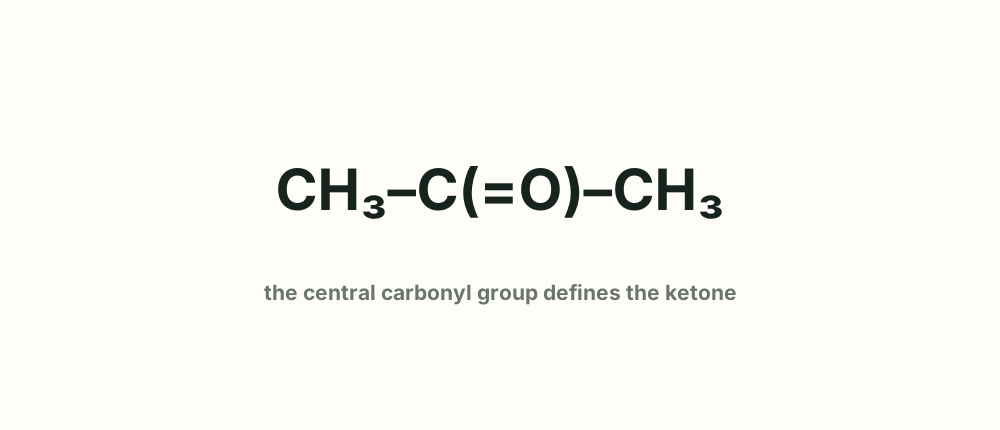
This distinguishes acetone from aldehydes.
The C=O bond is strongly polar and the carbonyl carbon is electron-poor relative to oxygen.
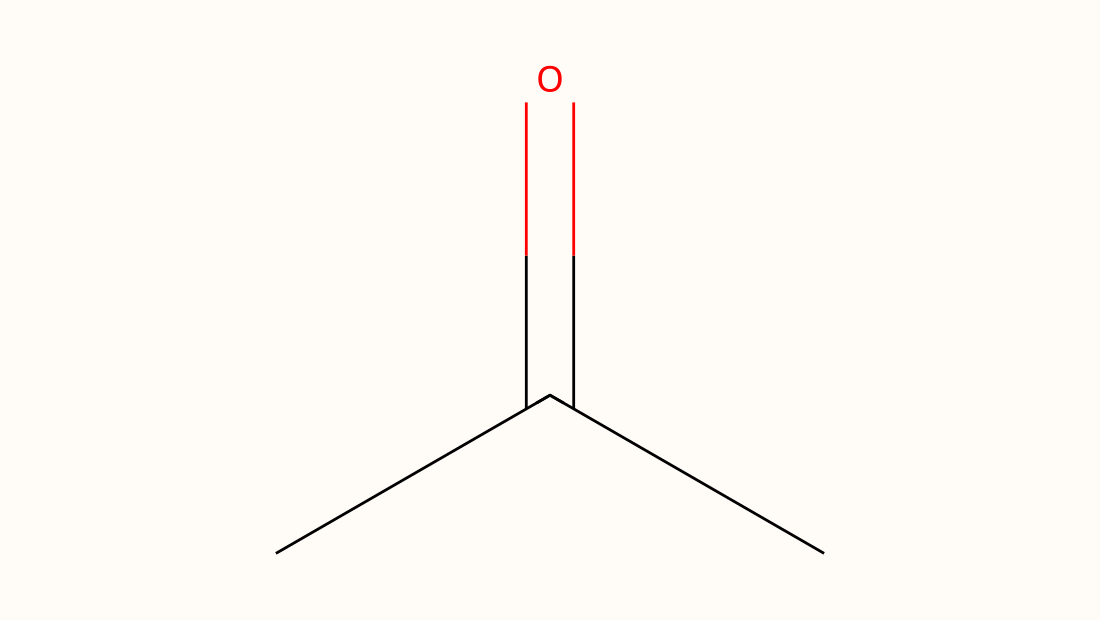
The carbonyl contribution is not canceled by symmetry.
The carbonyl oxygen can accept a hydrogen bond, but acetone lacks O–H or N–H groups and is not a conventional donor.
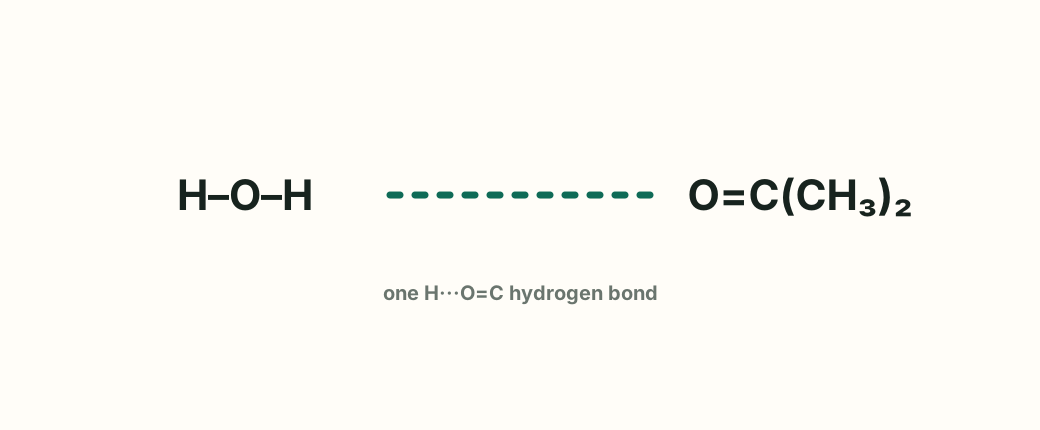
Acetone is small enough that these interactions strongly influence miscibility.
| Formula | C₃H₆O |
|---|---|
| CAS Registry Number | 67-64-1 |
| PubChem CID | 180 |
It can accept but lacks the usual donor group, so it does not build the same donor–acceptor network as water.
No. Molecular formula alone does not encode connectivity.
C=O polarization leaves carbonyl carbon electron-poor relative to oxygen.