Charge balance
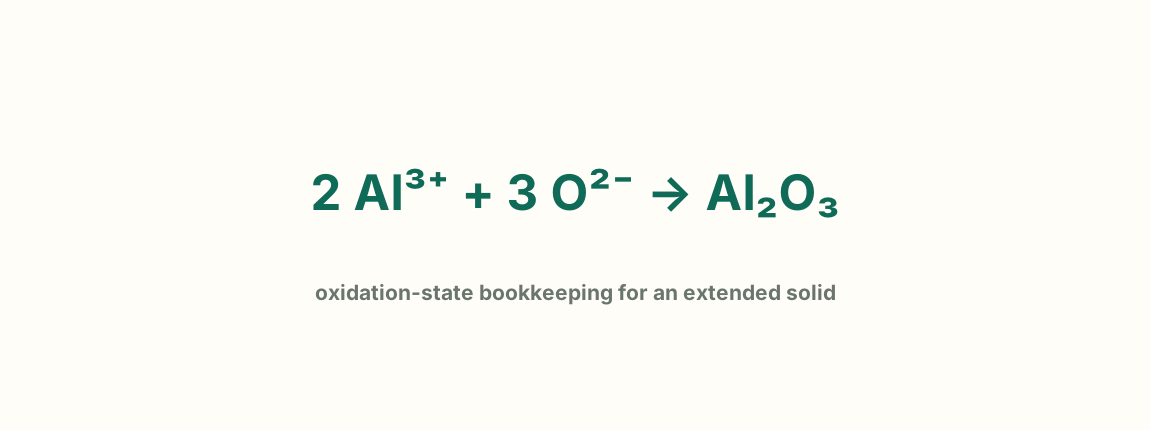
Two Al(III) contributions balance three oxide contributions.
2(+3) + 3(−2) = 0 in oxidation-state bookkeeping.
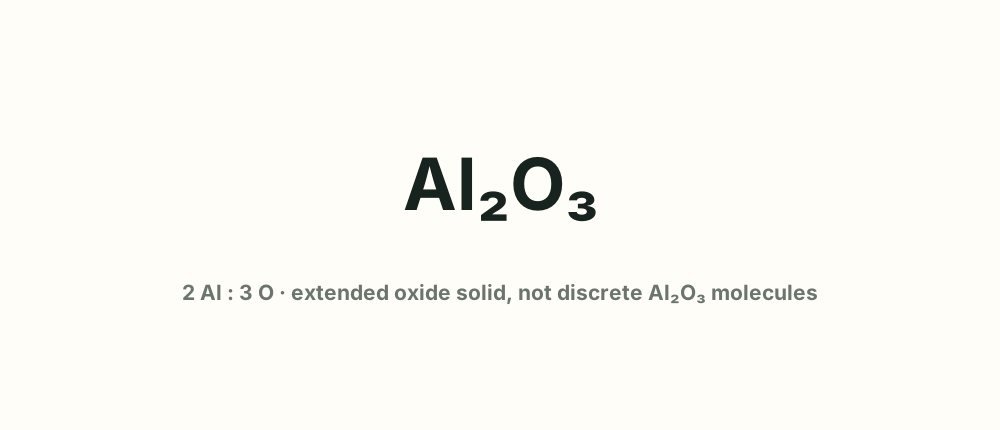
Aluminium oxide is Al₂O₃, an extended aluminium–oxygen solid. The 2:3 formula ratio follows naturally from aluminium in oxidation state +3 and oxide in −2 bookkeeping.
The formula records a 2:3 aluminium-to-oxygen ratio. It should not be interpreted as a tiny five-atom Al₂O₃ molecule in ordinary bulk alumina.
2(+3) + 3(−2) = 0 in oxidation-state bookkeeping.
Writing Al³⁺ and O²⁻ is useful for charge and oxidation-state reasoning. The actual solid has extended interactions and significant polarization/covalent character.
Al₂O₃ can be discussed through specific polymorphs; corundum is the thermodynamically stable form under ordinary ambient conditions.
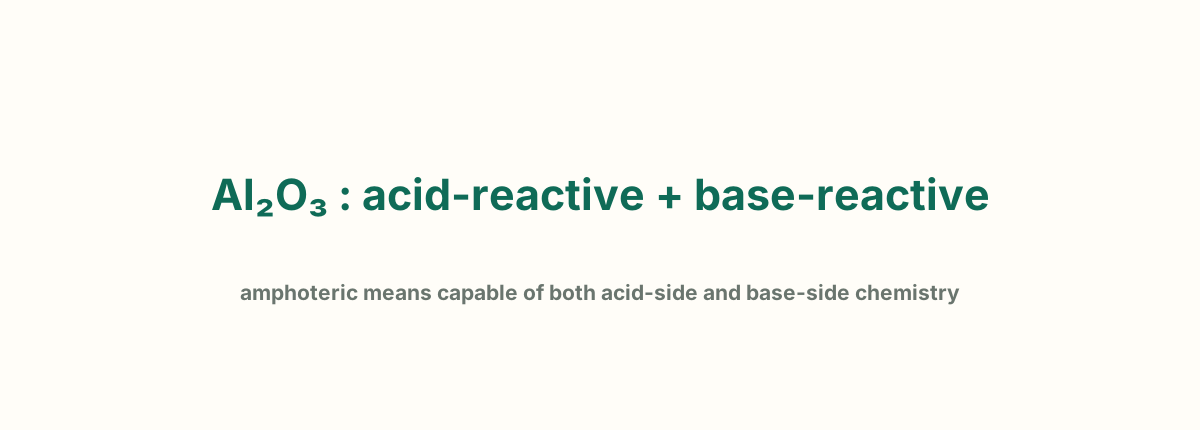
It can participate in acid–base chemistry on both sides: acids can protonate oxide-rich sites, while strong bases can form aluminate species under suitable conditions.
The compact oxide layer slows further reaction by separating the metal from its environment.
| Formula | Al₂O₃ |
|---|---|
| CAS Registry Number | 1344-28-1 |
| Important crystalline form | corundum |
Ionic charge bookkeeping is useful, but real alumina has extended bonding with both ionic and covalent character.
Their corundum host is Al₂O₃; trace substituent ions produce characteristic colors.
Aluminium oxide can react in both acidic and strongly basic chemical environments.