Ammonium vs ammonia
NH₄⁺ and NH₃ differ by one proton and one charge unit.
Ammonium has four N–H bonds; ammonia has three N–H bonds plus a lone pair.
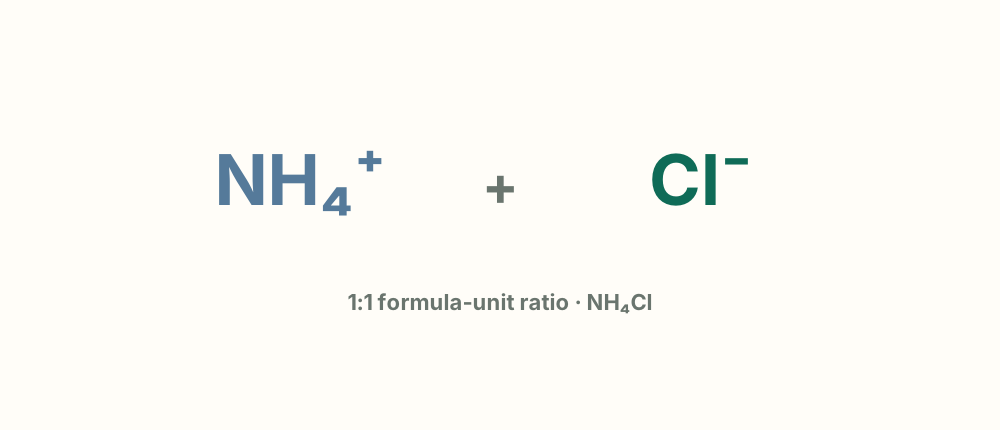
Ammonium chloride is NH₄Cl, an ionic solid composed of NH₄⁺ and Cl⁻ ions. The ammonium ion is a tetrahedral covalent polyatomic cation embedded in an ionic crystal.
A +1 ammonium ion and a −1 chloride ion balance in a 1:1 formula unit.
Ammonium has four N–H bonds; ammonia has three N–H bonds plus a lone pair.
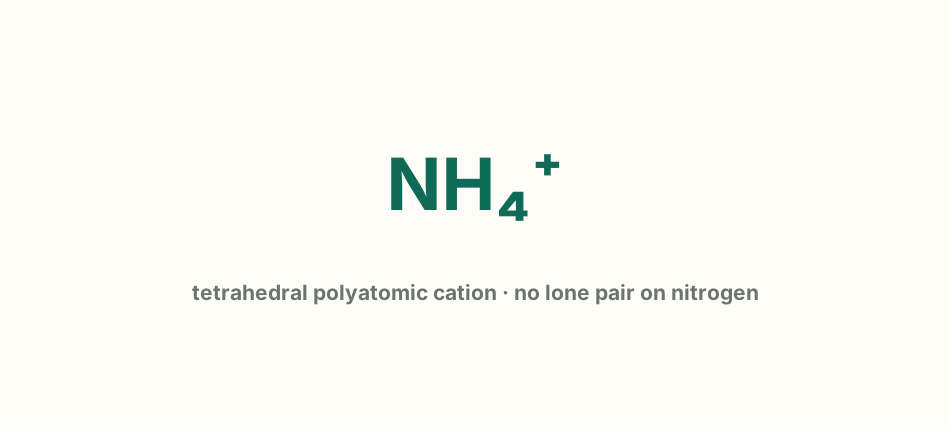
Four hydrogen atoms occupy tetrahedral directions around nitrogen. Protonating ammonia uses its lone pair to form the fourth N–H bond.
Its role in the simple formula is charge balance and ionic interaction with ammonium.
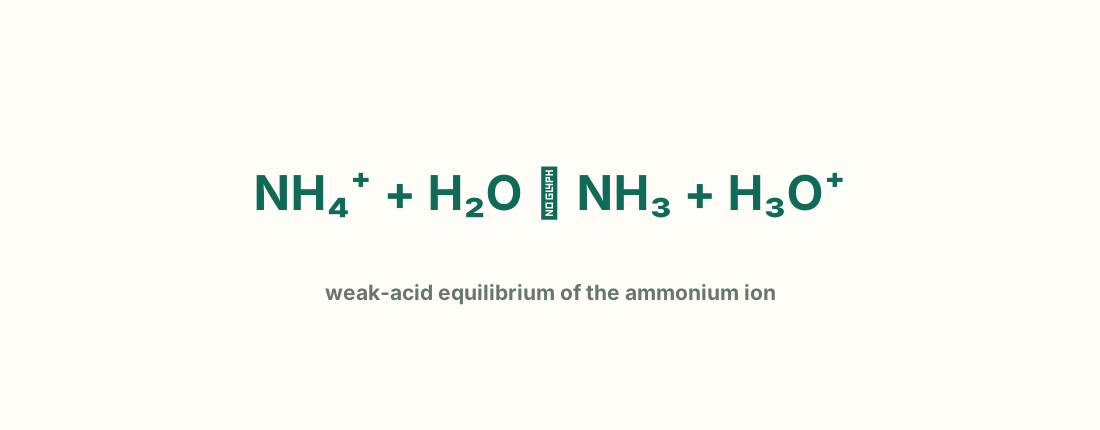
The ammonium ion can donate a proton to water, forming NH₃ and H₃O⁺ in an equilibrium. Chloride is a very weak Brønsted base in water.
Recognizing that pair links this page directly to the ammonia master.
| Formula | NH₄Cl |
|---|---|
| CAS Registry Number | 12125-02-9 |
| Ions | NH₄⁺ and Cl⁻ |
No. The solid is ionic, although NH₄⁺ itself contains covalent N–H bonds.
Four bonding directions surround nitrogen after ammonia is protonated.
NH₄⁺ can donate a proton to water, while chloride contributes little basicity.