Two internal structures
Both ions contain covalent bonds inside them.
Ionic attraction organizes the cations and anions into the solid.
Ammonium nitrate is NH₄NO₃, an ionic solid composed of NH₄⁺ and NO₃⁻. Both ions are polyatomic: ammonium has covalent N–H bonds, while nitrate has a resonance-delocalized N–O framework.
The +1 and −1 charges balance in a 1:1 formula unit. The formula is not a chain of nine atoms joined by ordinary covalent bonds.
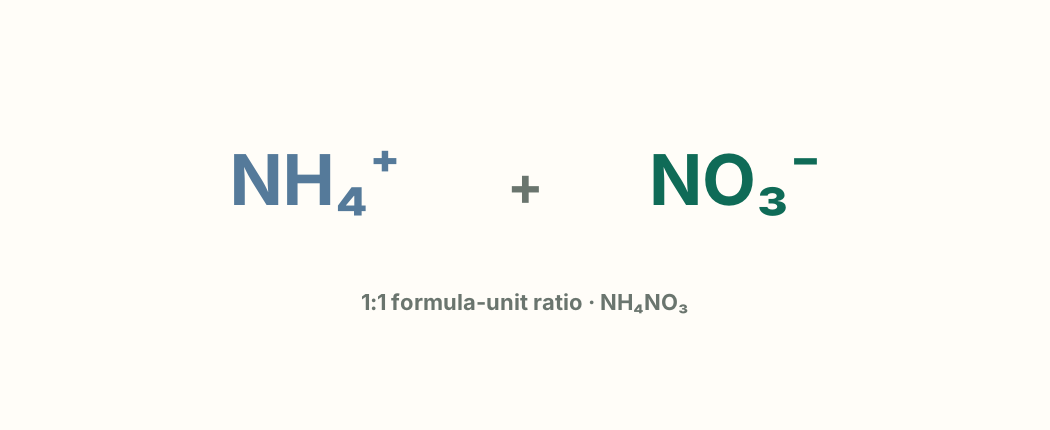
Ionic attraction organizes the cations and anions into the solid.
The two ions have very different local geometries even though both are built around nitrogen. Ammonium has four N–H bonds; nitrate has three delocalized N–O positions.
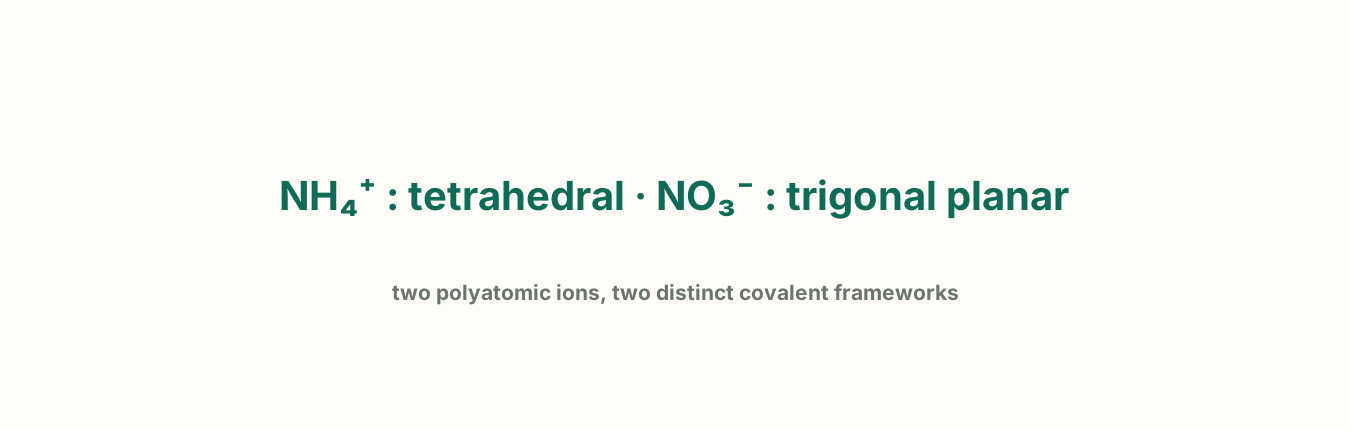
Oxidation state, bonding and geometry differ strongly between NH₄⁺ and NO₃⁻.
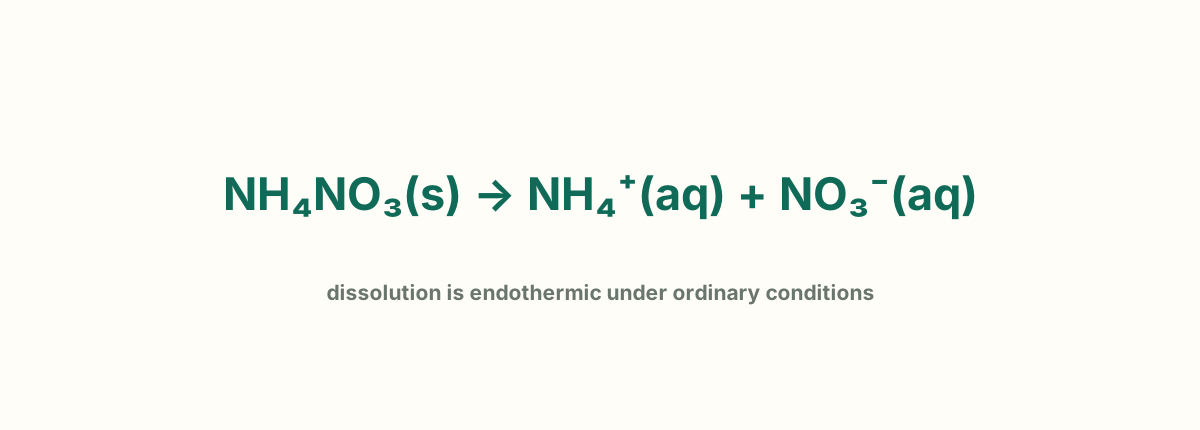
Water solvates NH₄⁺ and NO₃⁻. The dissolution process absorbs heat under ordinary conditions, which is a bulk thermodynamic effect rather than a change in chemical identity.
Nitrate is the conjugate base of a strong acid and is correspondingly very weak as a Brønsted base.
| Formula | NH₄NO₃ |
|---|---|
| CAS Registry Number | 6484-52-2 |
| Ions | NH₄⁺ and NO₃⁻ |
No. The solid is ionic and is represented by formula units.
One belongs to ammonium and one to nitrate; their bonding, charge and oxidation-state environments are different.
No. Heat flow during dissolution and chemical stability are different concepts.