Implicit H
Each ring carbon carries one hydrogen.
Skeletal drawings suppress many carbon and hydrogen labels.
Benzene is C₆H₆, a planar six-membered aromatic ring. Its six π electrons are delocalized around the ring, so benzene is not accurately described as three permanently localized C=C bonds.
A hexagon with a circle avoids choosing three permanent double bonds.
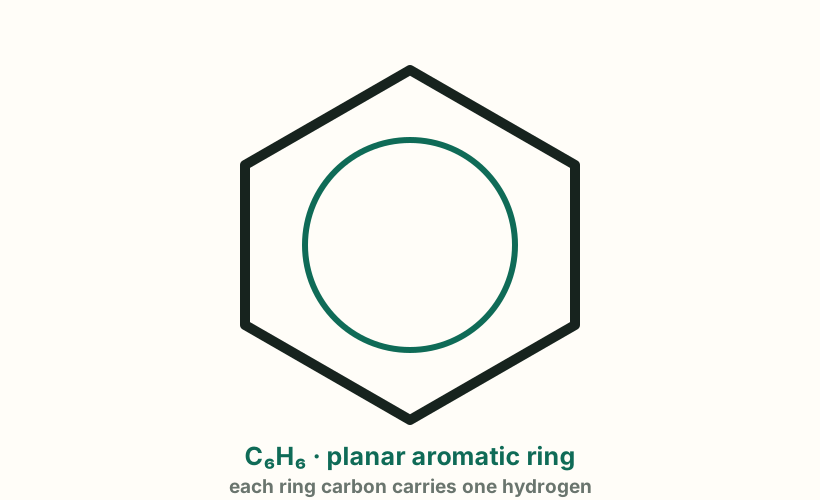
Skeletal drawings suppress many carbon and hydrogen labels.
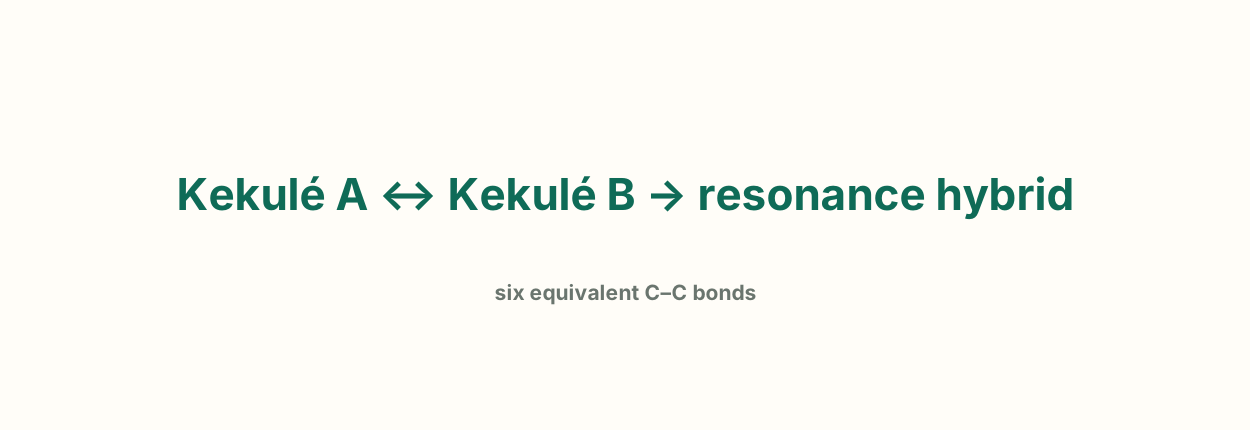
Chemistry software can draw alternating bonds or aromatic bonds; these represent one delocalized molecule.
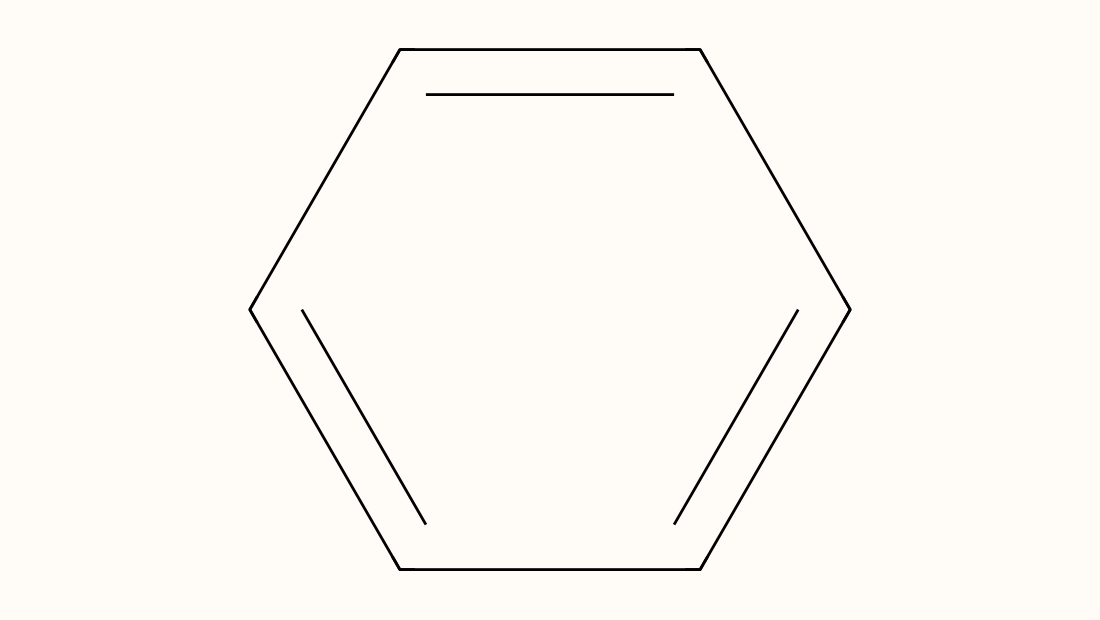
The measured ring has equivalent C–C bonds.
Reactions that preserve or restore aromaticity are often favored over additions that permanently destroy the aromatic system.
The detailed mechanism depends on reagent.
| Formula | C₆H₆ |
|---|---|
| CAS Registry Number | 71-43-2 |
| PubChem CID | 241 |
Yes, within benzene symmetry they are equivalent.
No. It is a graphical shorthand for delocalized π electron density.
No. Aromaticity is an electronic-structure concept.