Formula reading
Ca(OH)₂ contains two oxygens and two hydrogens.
The OH group is a polyatomic ion that must be counted as a unit.
Calcium hydroxide is Ca(OH)₂, an ionic solid composed of Ca²⁺ and OH⁻ ions. Two hydroxide ions are required to balance each calcium ion.
The parentheses matter: the subscript 2 applies to the entire hydroxide ion, not only to oxygen.
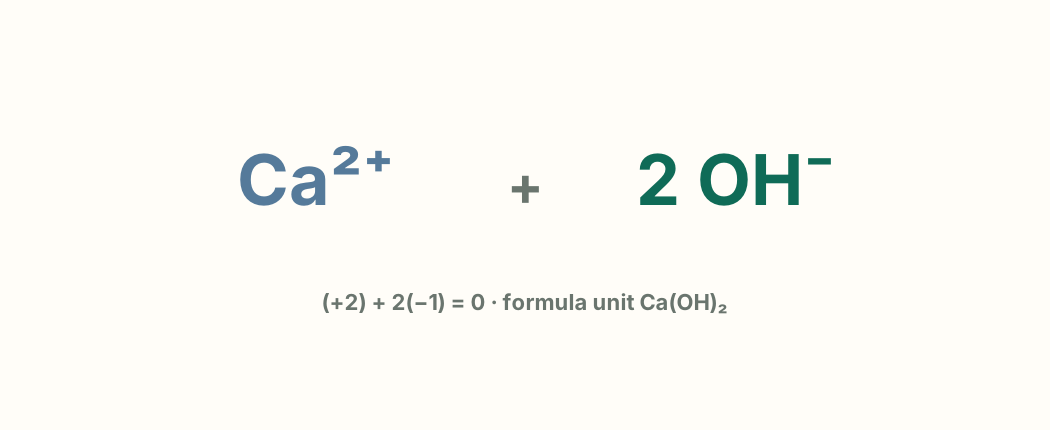
The OH group is a polyatomic ion that must be counted as a unit.
A saturated solution contains solvated Ca²⁺ and OH⁻ in equilibrium with undissolved solid. Strong-base behavior refers to the hydroxide ions present in solution, not to unlimited solubility.
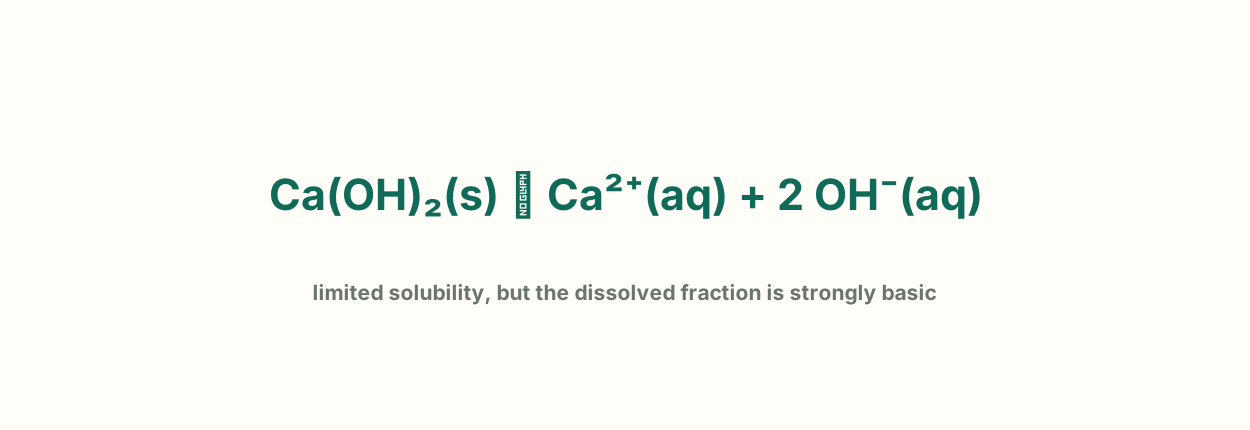
Solubility controls how much enters solution; acid–base strength describes the behavior of the dissolved species.
In aqueous acid–base chemistry, spectator ions can be omitted so the central change is H₃O⁺ reacting with OH⁻ to make water.
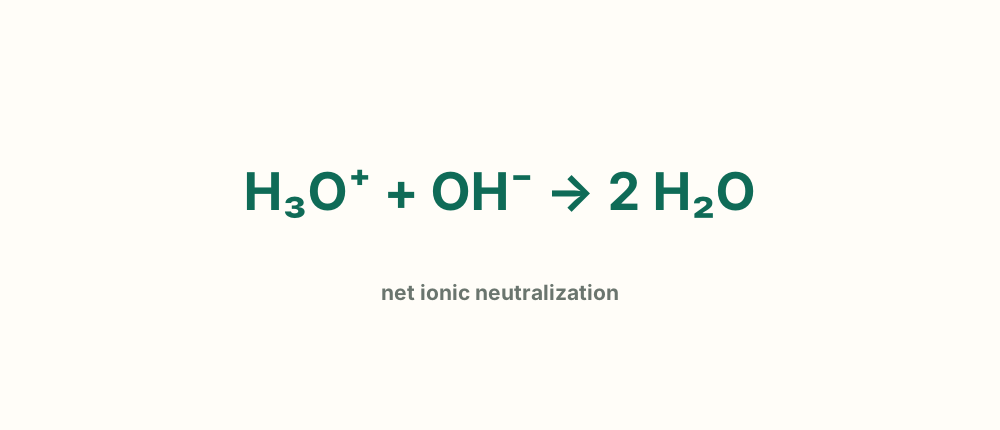
This links the calcium hydroxide and calcium carbonate pages through a familiar precipitation/carbonation process.
| Formula | Ca(OH)₂ |
|---|---|
| CAS Registry Number | 1305-62-0 |
| Common material name | slaked lime |
No. The solid is ionic; Ca(OH)₂ is a formula unit.
The fraction that dissolves supplies OH⁻ ions, and those ions strongly affect pH.
No. Limewater is an aqueous solution containing dissolved calcium hydroxide species.