Mendeleev
Mendeleev / Compounds / Calcium sulfate
Ionic solid · sulfate salt

Calcium sulfate

CaSO₄

Calcium sulfate is CaSO₄, an ionic solid composed of Ca²⁺ and SO₄²⁻ in a 1:1 ratio. The sulfate ion is a covalently bonded tetrahedral polyatomic anion.

Hydrate distinction: this master represents anhydrous CaSO₄. Gypsum is CaSO₄·2H₂O, while the hemihydrate has composition CaSO₄·½H₂O.
Essentials

CaSO₄ is one Ca²⁺ ion for one SO₄²⁻ ion.

The +2 and −2 charges balance in a 1:1 formula unit. The bulk solid is an extended ionic material, not a discrete CaSO₄ molecule.
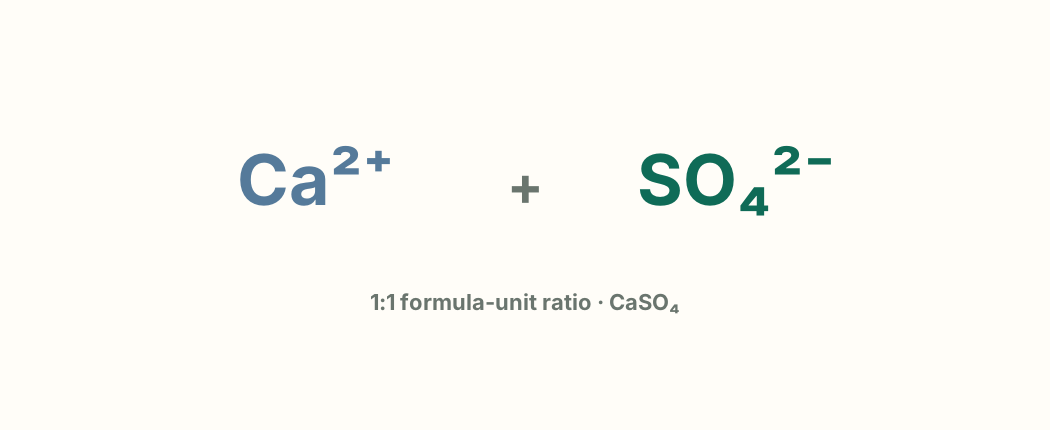
Calcium two plus and sulfate two minus shown as the components of calcium sulfate
Beginner view: a divalent cation and divalent polyatomic anion.
Two bonding levels

Ionic between calcium and sulfate; covalent inside sulfate.

This same distinction appears in many salts containing polyatomic ions.

Detail

The sulfate ion has a tetrahedral sulfur–oxygen framework.

Four oxygen positions surround sulfur. Resonance and delocalization mean one localized Lewis contributor should not be treated as the complete physical picture.
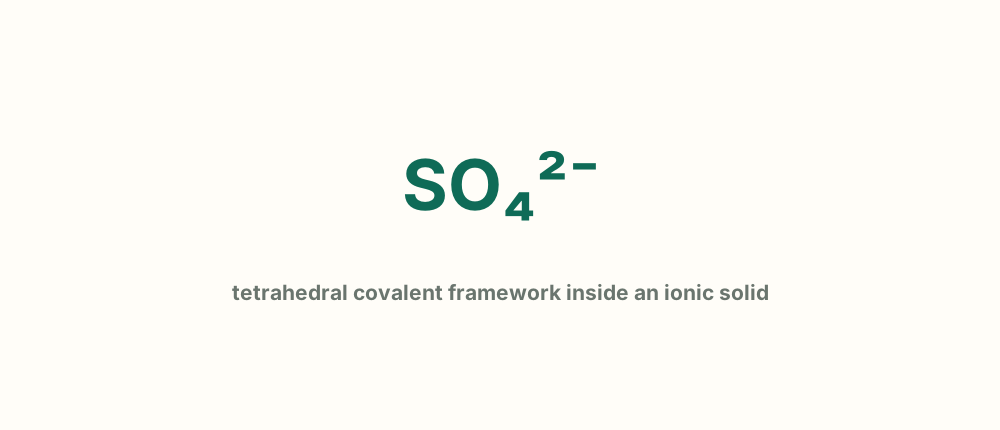
Sulfate ion labeled tetrahedral inside calcium sulfate
Detail view: the anion has internal geometry even though the bulk compound is ionic.
Crystal structure

Hydration changes the solid-state arrangement.

Water molecules incorporated into gypsum alter coordination and crystal packing compared with anhydrous calcium sulfate.

Read the formula

CaSO4 is a compact statement of composition.

Subscripts count atoms in the chemical formula unit. Atom percentages and mass percentages answer different questions because the constituent elements have different atomic masses.

1 Cacalcium atom
1 Ssulfur atom
4 Ooxygen atoms

Percentages are calculated from standard relative atomic masses and rounded for display.

Understand

Gypsum and anhydrite are not the same formula.

Gypsum includes two waters of crystallization for each CaSO₄ unit, while anhydrite is anhydrous. The hemihydrate contains half a water per CaSO₄ on average in its stoichiometric formula.
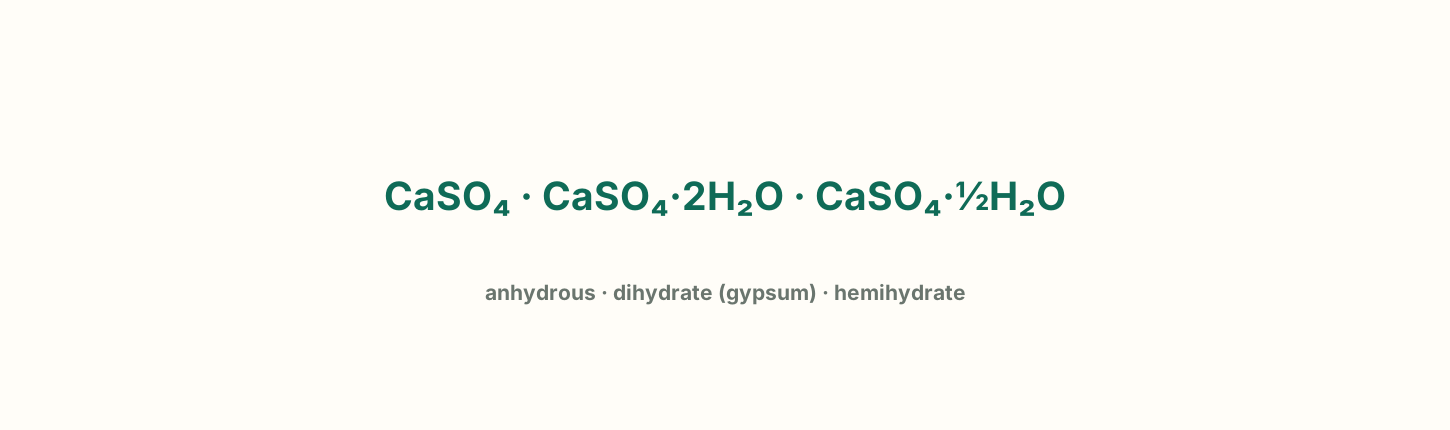
Anhydrous calcium sulfate compared with gypsum dihydrate and calcium sulfate hemihydrate
Water of crystallization is part of the chemical formula of a hydrate.
Material names

Gypsum and plaster materials need phase-aware naming.

Material processing can interconvert hydration states without changing the underlying Ca/S/O framework identity.

Reference identifiers

Names and identifiers that pin down the chemical identity.

FormulaCaSO₄
CAS Registry Number7778-18-9
Form representedanhydrous calcium sulfate / anhydrite composition
GypsumCaSO₄·2H₂O
Advanced

Push past the first model without losing the simple picture.

Is gypsum just damp CaSO₄?

No. Gypsum is the defined dihydrate CaSO₄·2H₂O.

Why can a hemihydrate have half a water?

The formula is a stoichiometric ratio averaged over the crystal: one H₂O for every two CaSO₄ units.

Is CaSO₄ a molecule?

No. Ordinary calcium sulfate solids are extended ionic materials represented by formula units.

Constituent elements

Connect the compound back to the periodic table.