Mendeleev
Mendeleev / Compounds / Citric acid
Molecular compound · hydroxytricarboxylic acid

Citric acid

C₆H₈O₇

Citric acid is C₆H₈O₇. It contains three carboxylic acid groups and one alcohol group, so three carboxyl protons can be removed stepwise.

Food distinction: citrus juice is a mixture containing citric acid, not pure citric acid.
Essentials

Three –COOH groups control ordinary acid behavior.

A condensed structural formula is more informative than C₆H₈O₇ alone because it exposes the functional groups.

Condensed citric acid structure with three COOH groups and one OH group
Beginner view: three carboxyl groups explain triprotic behavior.
Functional groups

The central –OH is an alcohol group.

It is not counted as a fourth ordinary carboxylic-acid proton.

Detail

The full 2D structure fixes connectivity.

Citric acid has a three-carbon backbone with three carboxyl groups and one central hydroxyl group.
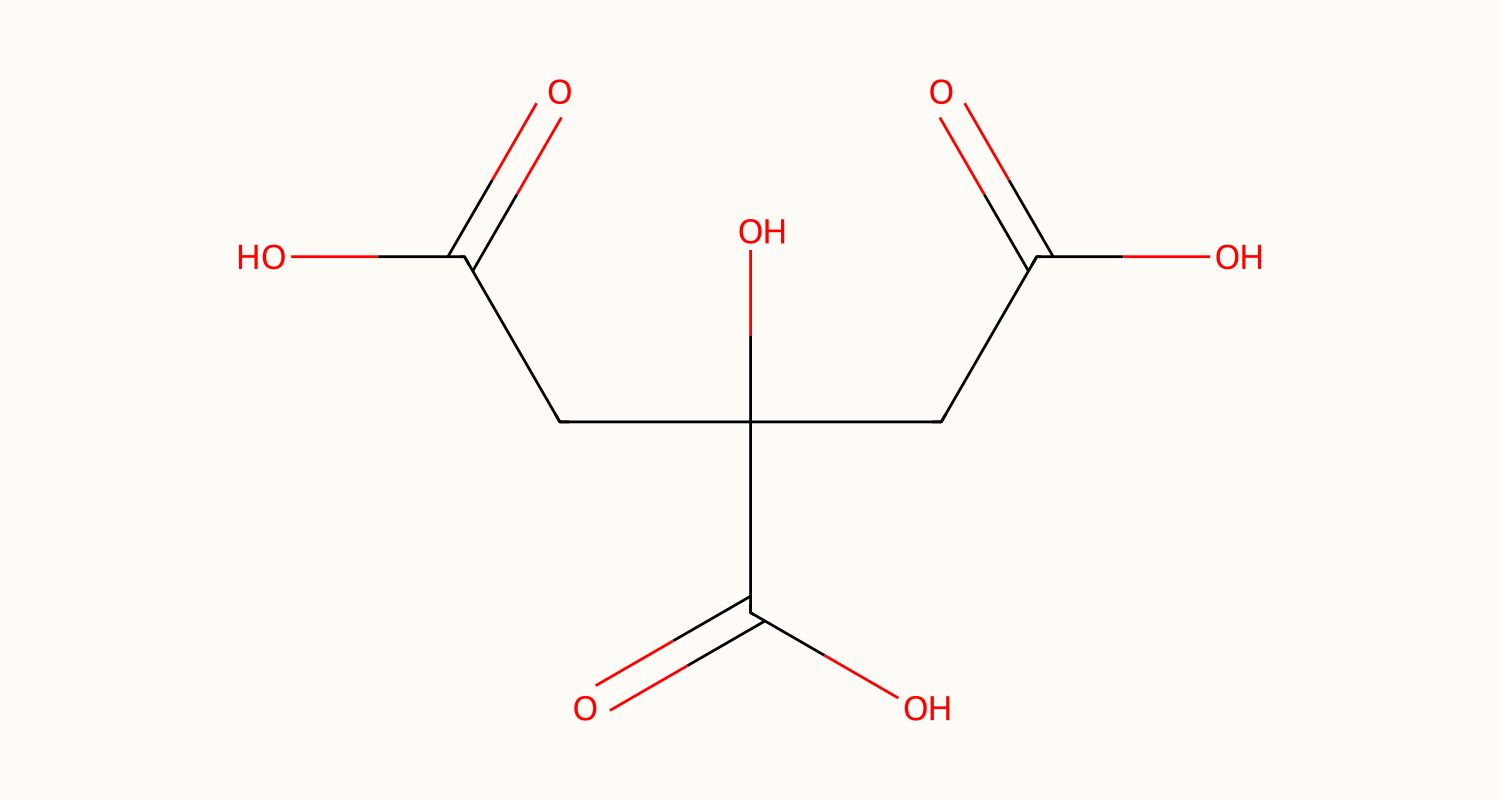
Source-derived two-dimensional structure of citric acid
Exact connectivity matters because formula alone does not encode functional groups.
2D ≠ rigidly flat

The skeletal drawing is a connectivity map.

Single bonds allow conformational motion in three dimensions.

Read the formula

C6H8O7 is a compact statement of composition.

Subscripts count atoms in the chemical molecule. Atom percentages and mass percentages answer different questions because the constituent elements have different atomic masses.

6 Ccarbon atoms
8 Hhydrogen atoms
7 Ooxygen atoms

Percentages are calculated from standard relative atomic masses and rounded for display.

Understand

Citric acid deprotonates stepwise to citrate.

Each step removes one carboxyl proton; which species dominate depends on pH.
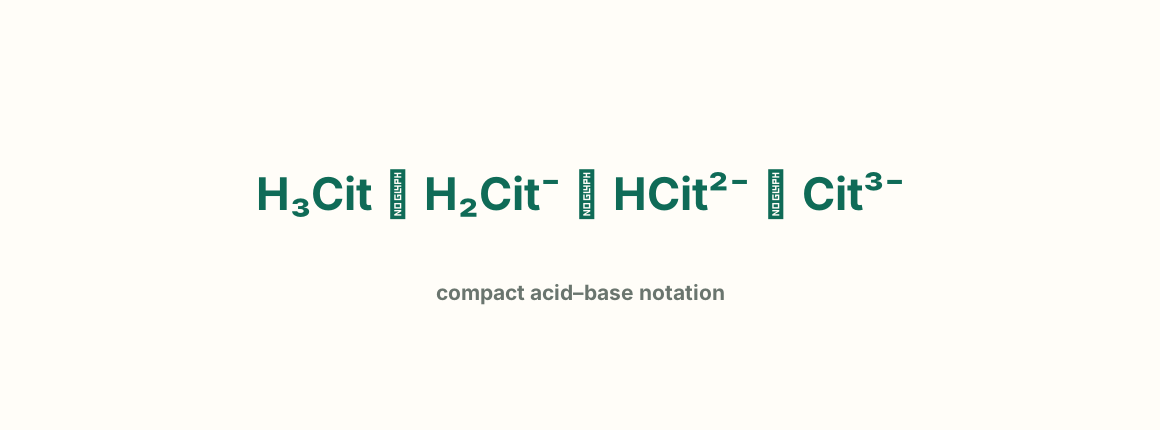
Citric acid deprotonation to citrate
Compact acid–base notation.
Citrate

Multiple oxygen donor sites let citrate bind metal ions.

This makes citrate chemically richer than a one-site acid.

Reference identifiers

Names and identifiers that pin down the chemical identity.

FormulaC₆H₈O₇
CAS Registry Number77-92-9
PubChem CID311
Advanced

Push past the first model without losing the simple picture.

Why triprotic?

Three carboxylic acid groups provide three readily ionizable protons.

Is citrate rigid?

No. It has defined connectivity but can adopt different conformations and coordination modes.

Is citric acid the same as lemon juice?

No. Juice is a multicomponent mixture.

Constituent elements

Connect the compound back to the periodic table.