Mendeleev
Mendeleev / Compounds / Ethyl acetate
Molecular compound · ester

Ethyl acetate

C₄H₈O₂

Ethyl acetate is C₄H₈O₂ with the condensed structure CH₃COOCH₂CH₃. The ester group contains a carbonyl carbon directly bonded to an oxygen that continues into an ethyl group.

Name note: ethyl acetate and ethyl ethanoate name the same compound.
Essentials

The defining motif is –C(=O)–O–.

The condensed structure shows a carbonyl oxygen and a second oxygen in the same functional group. That is the core ester pattern.
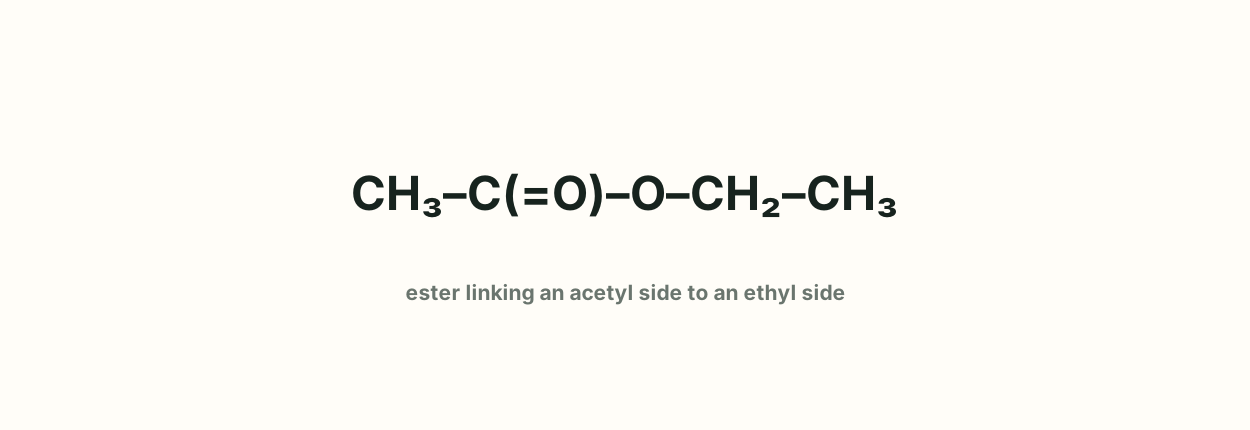
Condensed ethyl acetate structure CH3-C(=O)-O-CH2-CH3
Beginner view: carbonyl + adjacent oxygen = ester group.
Not ether + ketone

The two oxygens belong to one coupled functional group.

The ester carbonyl and single-bond oxygen influence each other electronically.

Detail

The source-derived structure fixes which oxygen is attached to the ethyl group.

Connectivity distinguishes ethyl acetate from other C₄H₈O₂ isomers. The flat skeletal representation is a map of bonds, not a rigid conformation.
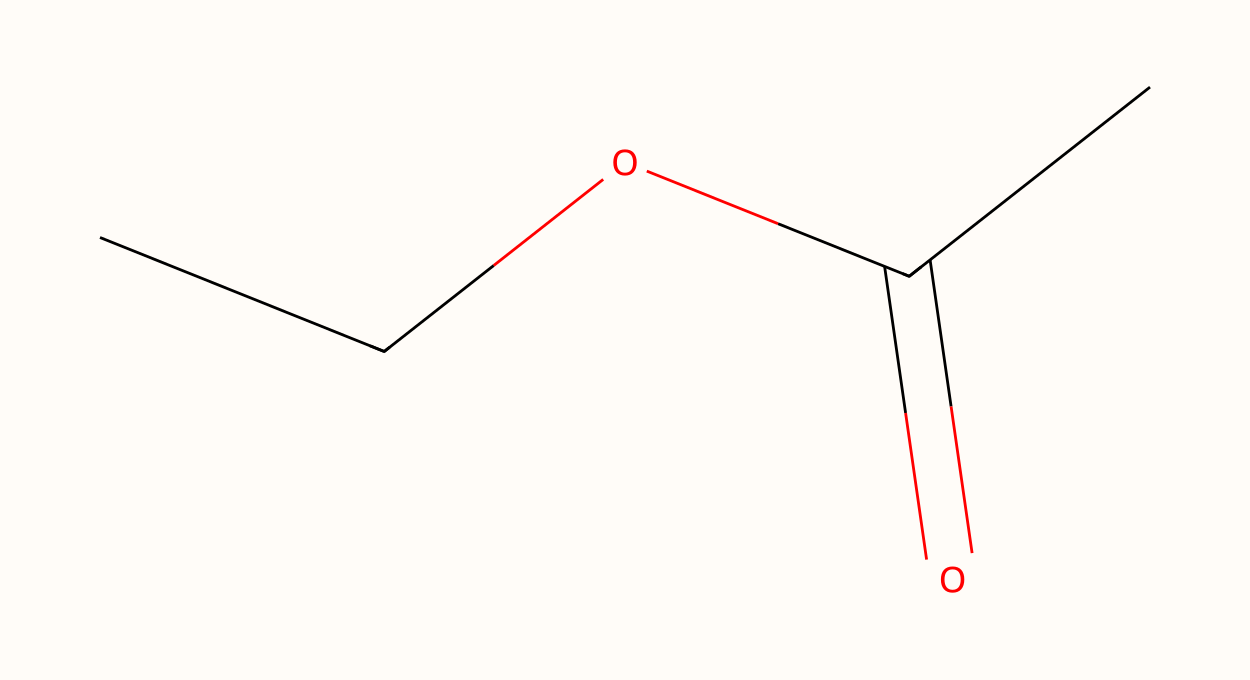
Source-derived two-dimensional structure of ethyl acetate
Reference structure: CH₃–C(=O)–O–CH₂–CH₃.
Polarity

The ester group is polar but has no O–H donor.

Both oxygen atoms influence intermolecular interactions, while the molecule lacks a hydroxyl hydrogen.

Read the formula

C4H8O2 is a compact statement of composition.

Subscripts count atoms in the chemical molecule. Atom percentages and mass percentages answer different questions because the constituent elements have different atomic masses.

4 Ccarbon atoms
8 Hhydrogen atoms
2 Ooxygen atoms

Percentages are calculated from standard relative atomic masses and rounded for display.

Understand

Hydrolysis reverses ester formation at the level of overall stoichiometry.

Adding water can convert ethyl acetate into acetic acid and ethanol under suitable catalytic conditions. The equation is reversible and does not imply a one-step uncatalyzed mechanism.
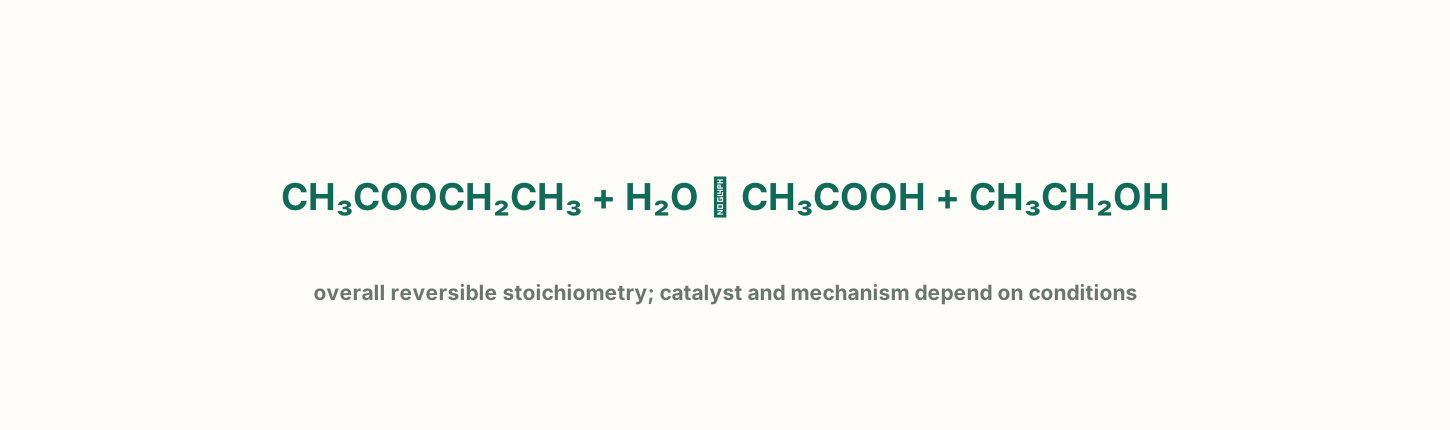
Ethyl acetate plus water in equilibrium with acetic acid and ethanol
Overall reversible stoichiometry; mechanism depends on acid/base catalysis and conditions.
Linked concepts

This page connects directly to the ethanol and acetic-acid masters.

Hydrolysis changes the ester connectivity back into an alcohol and carboxylic acid.

Reference identifiers

Names and identifiers that pin down the chemical identity.

FormulaC₄H₈O₂ / CH₃COOC₂H₅
CAS Registry Number141-78-6
PubChem CID8857
Advanced

Push past the first model without losing the simple picture.

Is ethyl acetate a mixture of ethanol and acetic acid?

No. It is a distinct compound with new covalent connectivity.

Why is hydrolysis often catalyzed?

Breaking and forming acyl–oxygen bonds has a significant activation barrier; acid or base changes the pathway.

Does C₄H₈O₂ uniquely specify ethyl acetate?

No. Several constitutional isomers share that molecular formula.

Constituent elements

Connect the compound back to the periodic table.