Mendeleev
Mendeleev / Compounds / Ethylene glycol
Molecular compound · diol

Ethylene glycol

C₂H₆O₂

Ethylene glycol is C₂H₆O₂ with the structure HOCH₂–CH₂OH. It is a diol: two hydroxyl groups sit on a two-carbon chain.

Product distinction: antifreeze formulations can contain ethylene glycol, water and additives. The formulation is not the same thing as the pure compound.
Essentials

Two terminal –OH groups define the diol.

The structure HO–CH₂–CH₂–OH makes the two hydroxyl groups explicit and distinguishes ethylene glycol from compounds sharing the same atom counts but different connectivity.
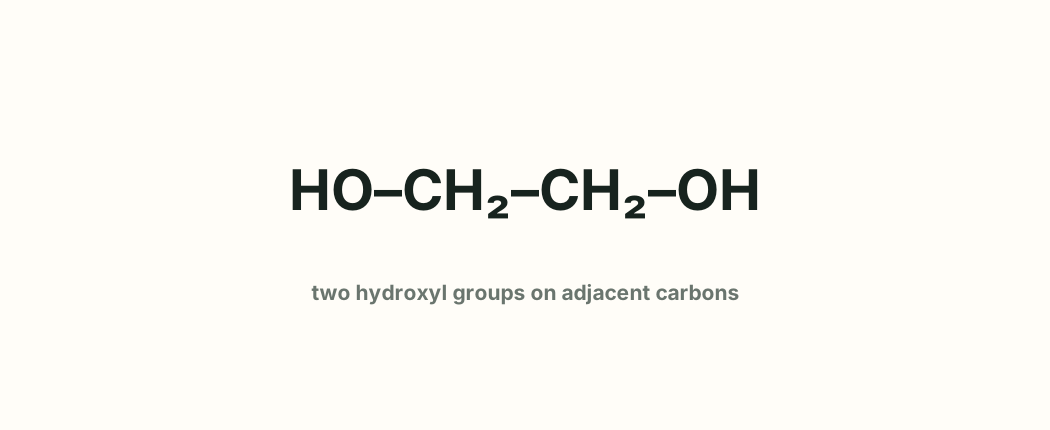
Condensed ethylene glycol structure HO-CH2-CH2-OH
Beginner view: a two-carbon chain with one hydroxyl group at each end.
Series

One, two, three hydroxyl groups give different alcohol classes.

Methanol is a monohydric alcohol, ethylene glycol a diol, and glycerol a triol.

Detail

The exact 2D structure is flexible around single bonds.

Both carbon atoms are tetrahedral in local geometry, and rotation about the C–C bond produces different conformations.
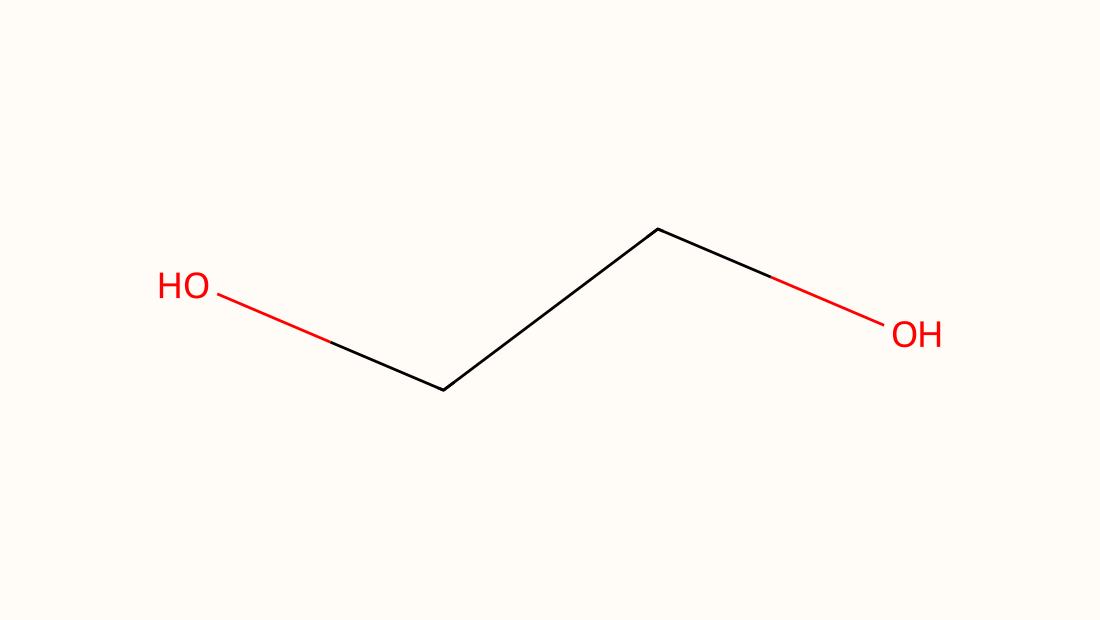
Source-derived two-dimensional structure of ethylene glycol
Reference structure: ethane-1,2-diol.
Conformation

The two –OH groups can approach or separate as bonds rotate.

Conformation affects intra- and intermolecular interaction possibilities.

Read the formula

C2H6O2 is a compact statement of composition.

Subscripts count atoms in the chemical molecule. Atom percentages and mass percentages answer different questions because the constituent elements have different atomic masses.

2 Ccarbon atoms
6 Hhydrogen atoms
2 Ooxygen atoms

Percentages are calculated from standard relative atomic masses and rounded for display.

Understand

Hydroxyl count changes intermolecular interaction capacity.

Comparing methanol, ethylene glycol and glycerol shows how additional –OH groups create more donor/acceptor sites while molecular size and geometry change too.
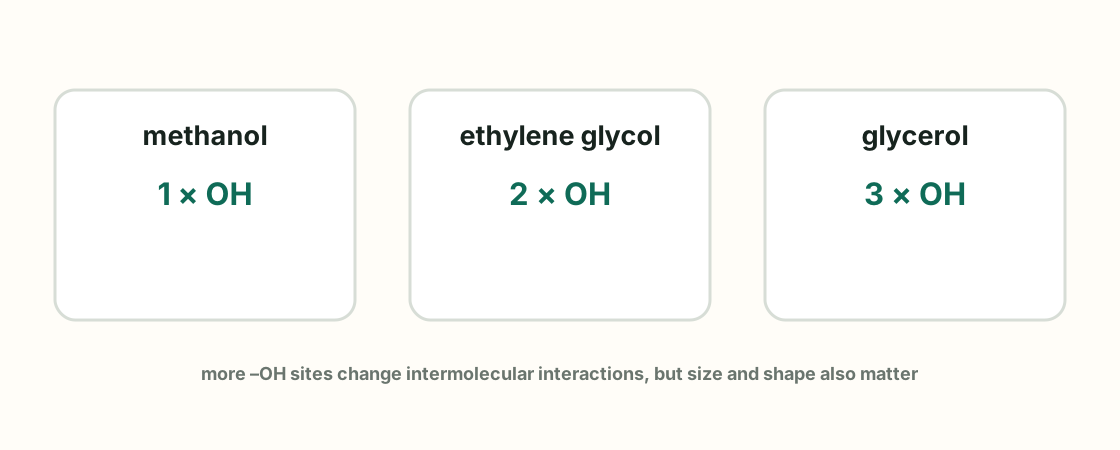
Comparison of methanol ethylene glycol and glycerol by hydroxyl group count
The comparison is qualitative: properties do not scale by simply counting –OH groups.
Water interactions

Ethylene glycol hydrogen-bonds strongly with water.

This contributes to high water affinity, but mixture properties also reflect non-ideal thermodynamics.

Reference identifiers

Names and identifiers that pin down the chemical identity.

FormulaC₂H₆O₂ / HOCH₂CH₂OH
CAS Registry Number107-21-1
PubChem CID174
Advanced

Push past the first model without losing the simple picture.

Why is ethylene glycol called a glycol?

Historically, glycol became a common name for ethane-1,2-diol and later for related diols.

Does two –OH groups mean twice the boiling point of methanol?

No. Bulk properties are emergent and do not scale linearly with functional-group count.

Is antifreeze pure ethylene glycol?

Usually no. Commercial antifreeze is a formulation with water and additives.

Constituent elements

Connect the compound back to the periodic table.