Polyol
More than one alcohol group can exist in one molecule.
Glycerol is a triol because it has three alcohol functional groups.
Glycerol is C₃H₈O₃, a three-carbon triol. Its condensed structure HOCH₂–CHOH–CH₂OH places one hydroxyl group on each carbon.
The condensed structure is much more informative than C₃H₈O₃ because it shows one hydroxyl group on each carbon of the three-carbon chain.
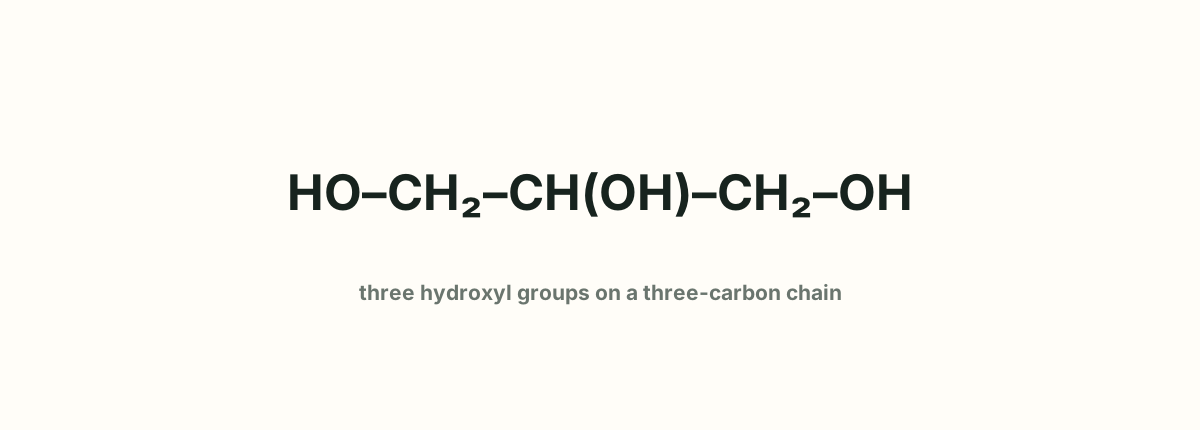
Glycerol is a triol because it has three alcohol functional groups.
Single C–C and C–O bonds allow many three-dimensional conformations; the flat drawing is a connectivity map, not a rigid molecular pose.
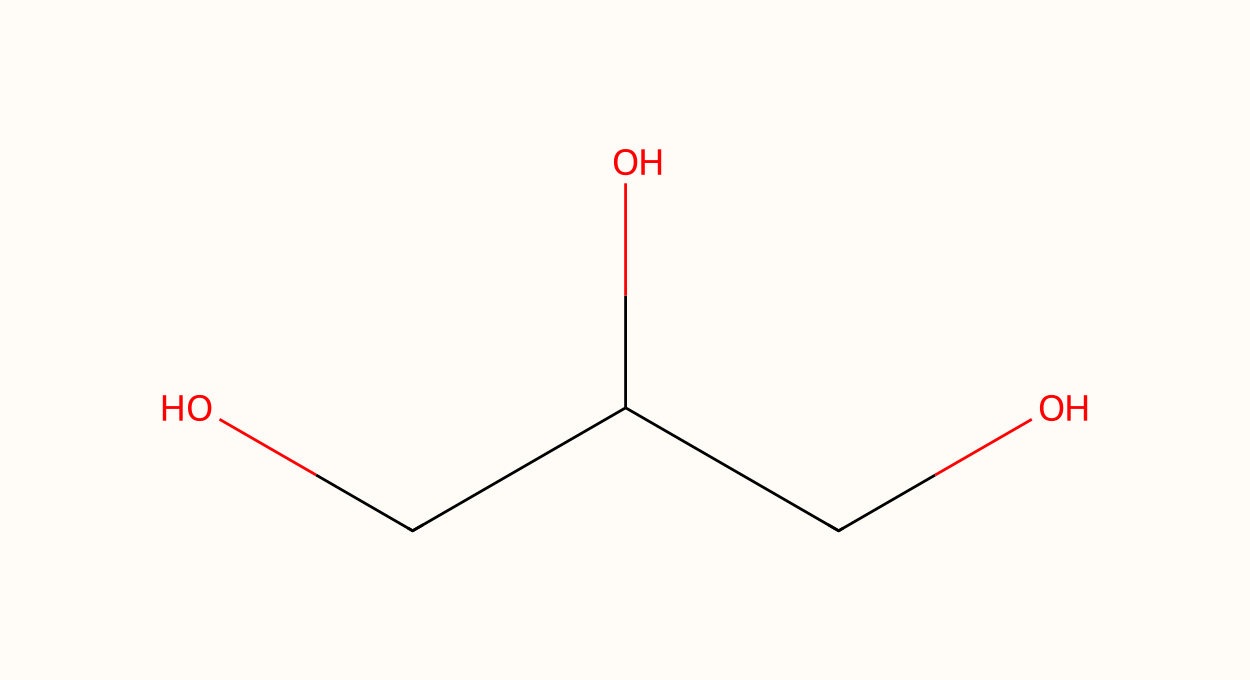
Rotation about single bonds produces many conformations while preserving connectivity.
Each hydroxyl can participate in donor and acceptor interactions, producing a dense intermolecular hydrogen-bond network in glycerol and in mixtures with water.
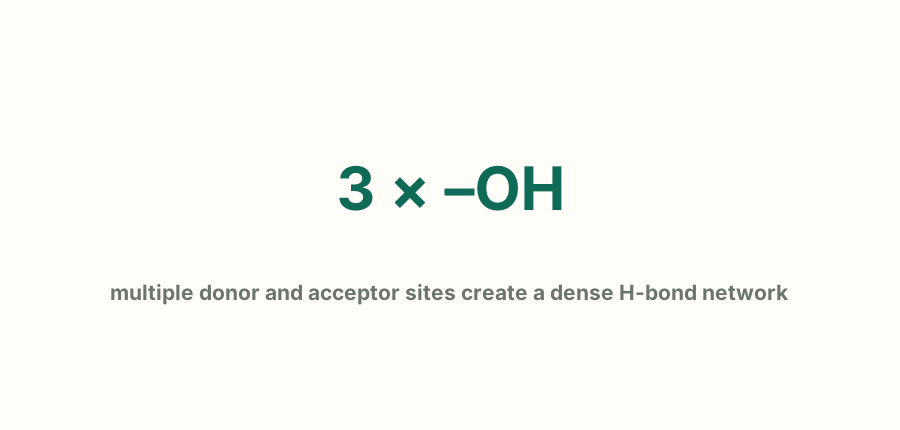
Hydrogen bonding is one major contributor to glycerol's high viscosity, alongside molecular size and shape.
| Formula | C₃H₈O₃ |
|---|---|
| CAS Registry Number | 56-81-5 |
| PubChem CID | 753 |
Unsubstituted glycerol is achiral because the two terminal CH₂OH groups are equivalent.
No. Interaction counts and strengths are not linearly additive; geometry, concentration and network organization matter.
Not necessarily. Commercial naming can refer to glycerol-rich material with specified water or impurity content.