Mendeleev
Mendeleev / Compounds / Iron(III) oxide
Extended solid · iron oxide

Iron(III) oxide

Fe₂O₃

Iron(III) oxide is Fe₂O₃, an extended solid with a 2:3 iron-to-oxygen ratio. The name “iron(III)” records iron in the +3 oxidation state for chemical bookkeeping.

Material distinction: rust is not simply pure Fe₂O₃. Real corrosion products can contain hydrated iron oxides, iron oxyhydroxides and other phases.
Essentials

Fe₂O₃ is a formula unit for an extended solid, not a five-atom molecule.

The formula records the overall 2:3 stoichiometric ratio. Solid iron(III) oxide contains a repeating three-dimensional arrangement rather than isolated Fe₂O₃ molecules.
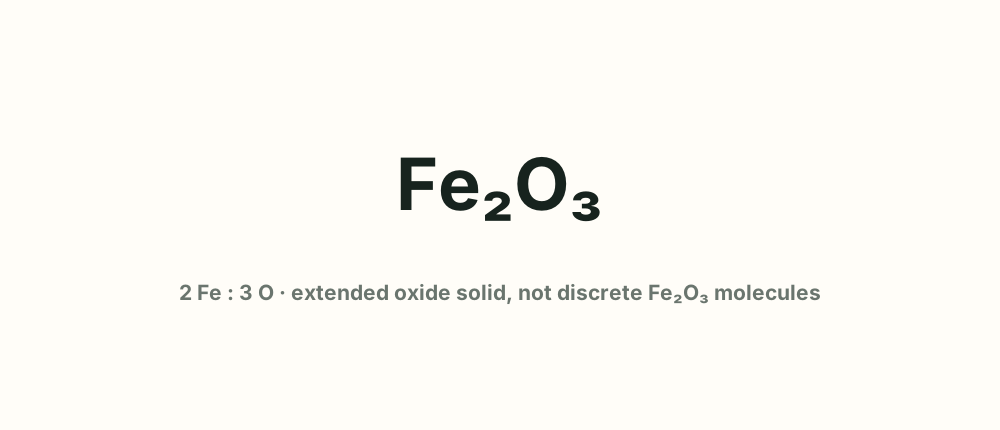
Iron(III) oxide formula Fe2O3 labeled as an extended solid with a two to three ratio
Beginner view: composition first, without inventing a discrete molecule.
Oxidation state

“Iron(III)” means Fe is assigned +3.

With oxide assigned −2, two Fe(III) centers balance three oxide units in the stoichiometric formula.

Detail

Fe³⁺ / O²⁻ notation is useful bookkeeping, but the crystal is an extended bonded solid.

The oxidation-state model explains charge balance cleanly. Real solid-state bonding includes electrostatic and covalent contributions distributed through the crystal.
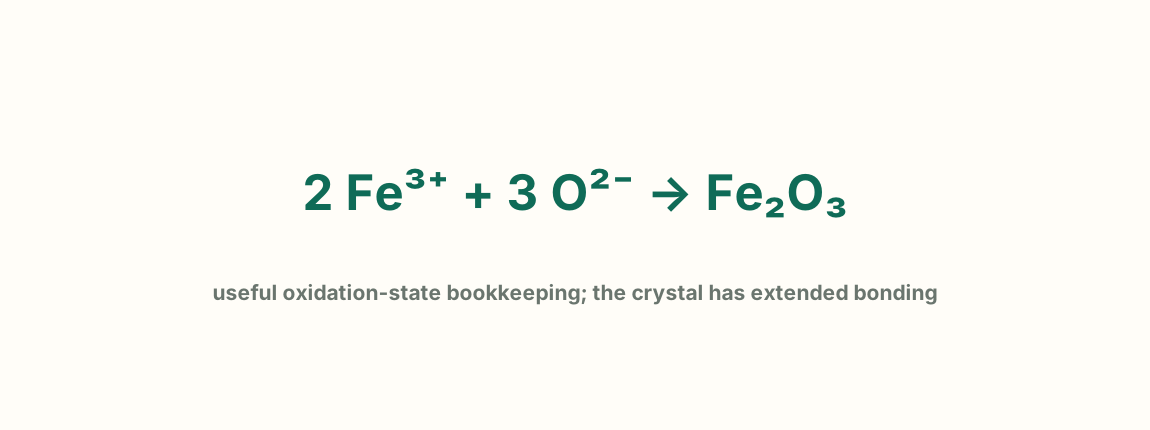
Two iron three plus and three oxide two minus written as charge bookkeeping for Fe2O3
Detail view: oxidation states explain stoichiometry, not isolated free ions inside the crystal.
Crystal form

Hematite is a major crystalline form of Fe₂O₃.

Crystal structure specifies how atoms are arranged; the chemical formula alone does not encode the full lattice.

Read the formula

Fe2O3 is a compact statement of composition.

Subscripts count atoms in the chemical formula unit. Atom percentages and mass percentages answer different questions because the constituent elements have different atomic masses.

2 Feiron atoms
3 Ooxygen atoms

Percentages are calculated from standard relative atomic masses and rounded for display.

Understand

Rust is a corrosion material, not a single pure compound formula.

Depending on water, oxygen, salts and time, corrosion can produce several iron oxide and oxyhydroxide phases. Fe₂O₃ is therefore one relevant compound, not a universal molecular formula for rust.
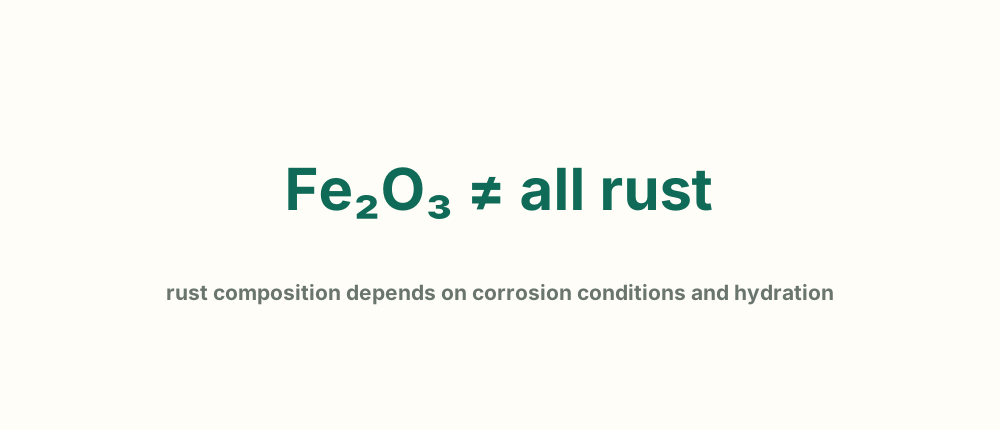
Iron(III) oxide formula shown as not equivalent to all rust
The distinction prevents a common compound-versus-material error.
Same element, different oxide

Iron can form more than one oxide.

FeO, Fe₃O₄ and Fe₂O₃ differ in stoichiometry and iron oxidation-state distribution.

Reference identifiers

Names and identifiers that pin down the chemical identity.

FormulaFe₂O₃
CAS Registry Number1309-37-1
Common crystalline formhematite
Advanced

Push past the first model without losing the simple picture.

Is Fe₂O₃ made of Fe₂O₃ molecules?

No. Ordinary solid iron(III) oxide is an extended crystalline solid.

Is every red-brown rust particle hematite?

No. Rust can contain multiple hydrated and oxyhydroxide phases.

Why is the compound called iron(III) oxide?

The Stock numeral III identifies iron's +3 oxidation state in the compound.

Constituent elements

Connect the compound back to the periodic table.