Acidic proton
The carboxyl O–H is the ordinary acidic proton.
Removing it gives lactate; the alcohol –OH is a different functional group.
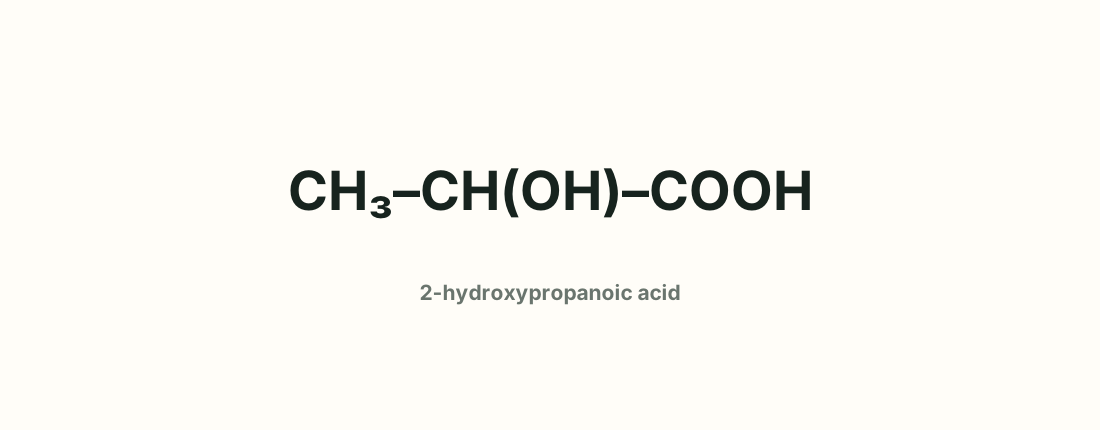
Lactic acid is C₃H₆O₃ with the connectivity CH₃–CH(OH)–COOH. It contains one alcohol group and one carboxylic acid group, and its middle carbon is stereogenic.
The condensed structure shows why lactic acid is both a hydroxy compound and a carboxylic acid.
Removing it gives lactate; the alcohol –OH is a different functional group.
It is attached to four different groups: H, OH, CH₃ and COOH. Therefore two mirror-image configurations are possible.
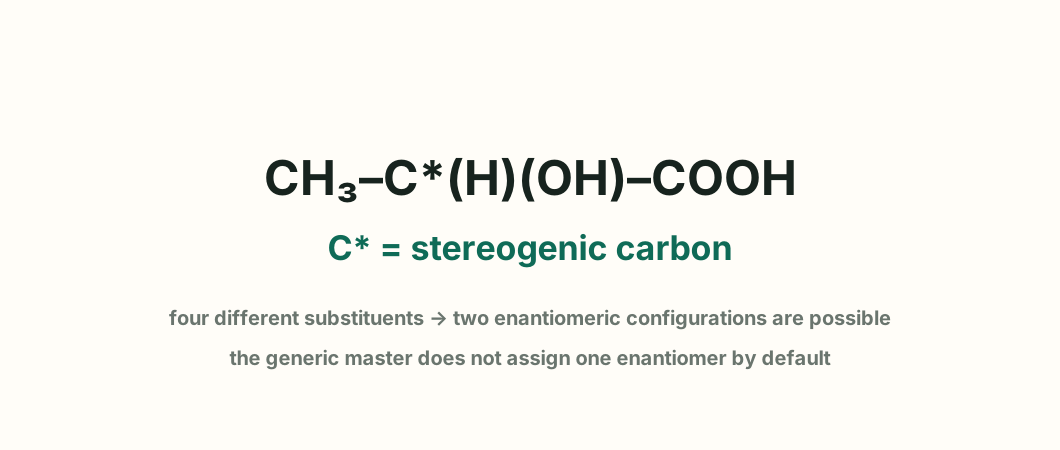
A stereochemical descriptor is required when the handedness matters.
The carboxylic acid group transfers a proton in acid–base chemistry, giving a lactate anion while preserving the carbon skeleton and stereogenic center.
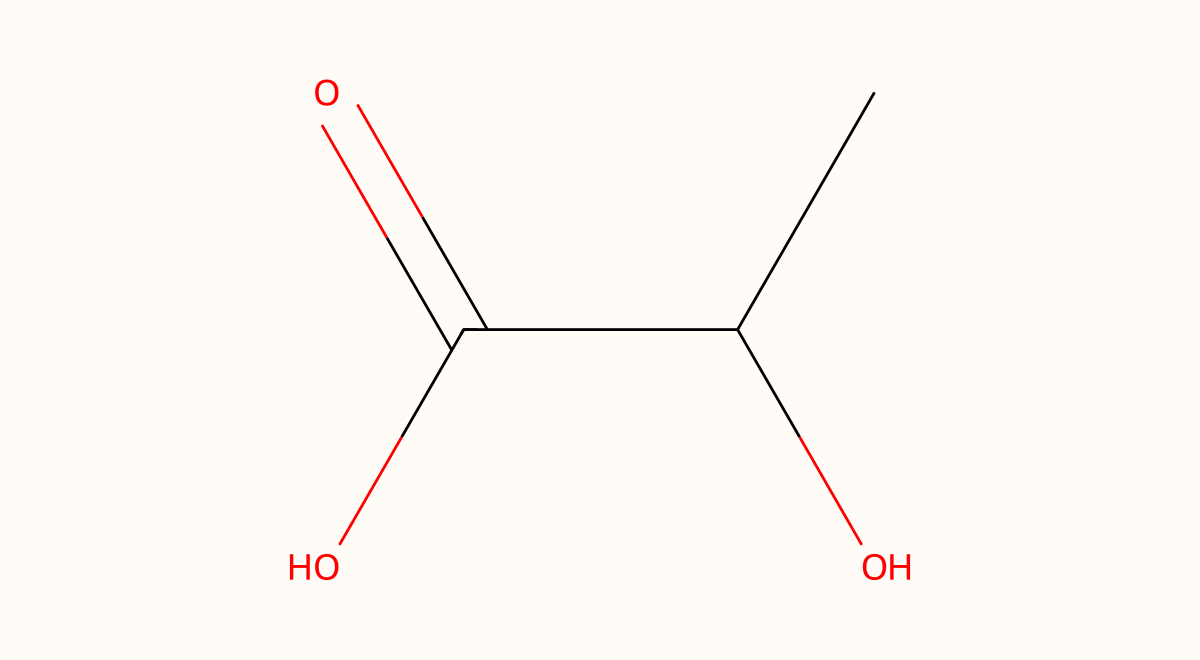
The stereochemical identity of lactate matters in enzyme recognition even though both enantiomers share formula and connectivity.
| Formula | C₃H₆O₃ / CH₃CHOHCOOH |
|---|---|
| CAS Registry Number | 50-21-5 |
| PubChem CID | 612 |
| Stereochemistry | generic master: unspecified |
No. The generic name can be used without specifying configuration; stereospecific names are needed when handedness matters.
Deprotonation of the carboxyl group leaves a carboxylate whose negative charge is resonance-delocalized over two oxygens.
No. They are a conjugate acid–base pair differing by one proton and one unit of charge.