Formula unit
One Mg for one O does not imply a discrete diatomic molecule.
The solid repeats magnesium–oxygen interactions through a three-dimensional lattice.
Magnesium oxide is MgO, an extended magnesium–oxygen solid with a 1:1 stoichiometric ratio. Charge bookkeeping assigns Mg as +2 and oxide as −2.
The simplest charge model pairs Mg²⁺ and O²⁻ contributions. That explains stoichiometry without inventing a two-atom molecule in the bulk solid.
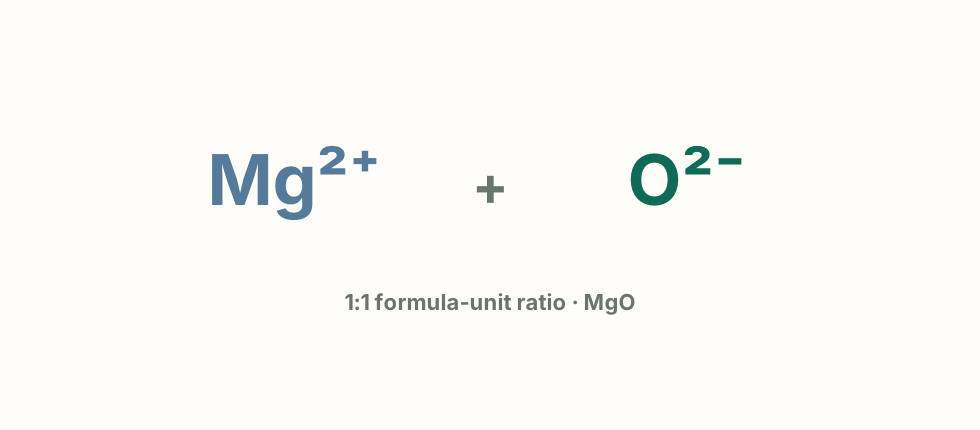
The solid repeats magnesium–oxygen interactions through a three-dimensional lattice.
In the ideal crystal, each Mg center has six nearest oxygen neighbors and each oxygen has six nearest magnesium neighbors.
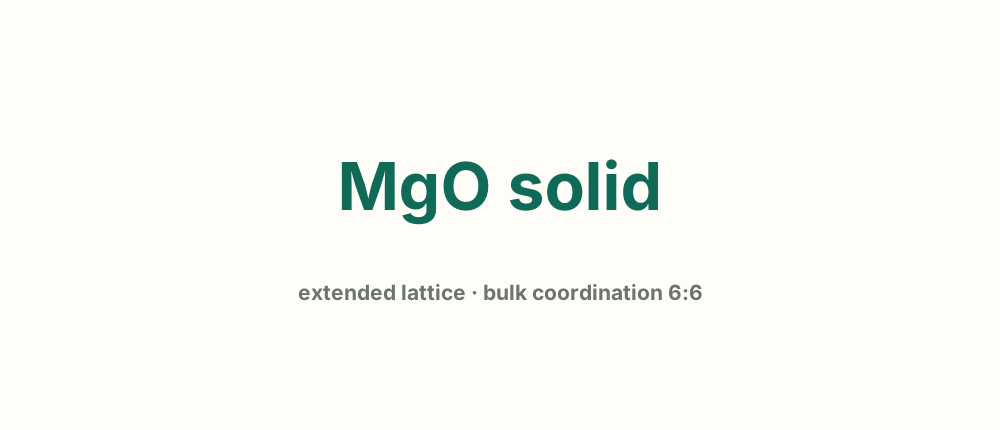
Strong electrostatic character dominates, while real electron density is still continuous and polarizable.
Its oxide-rich surface can react with water and acids. The compact equation with water connects MgO conceptually to magnesium hydroxide.
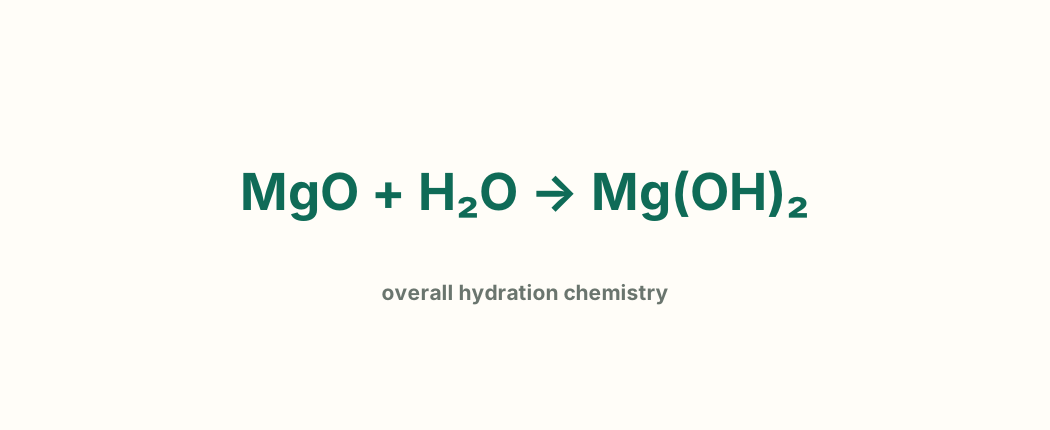
Hydration changes the formula and introduces hydroxide groups rather than merely wetting an unchanged MgO molecule.
| Formula | MgO |
|---|---|
| CAS Registry Number | 1309-48-4 |
| Common bulk structure | rock-salt type |
Not in ordinary bulk solid magnesium oxide; MgO is a formula unit for an extended lattice.
The rock-salt structure places six oppositely charged nearest neighbors around each ion in the ideal bulk crystal.
Oxide sites can accept protons, so MgO reacts with acids and can form hydroxide-related products with water.