Compare ethanol
Methanol has one carbon; ethanol has two.
Both are alcohols because each contains an –OH group attached to a saturated carbon framework.
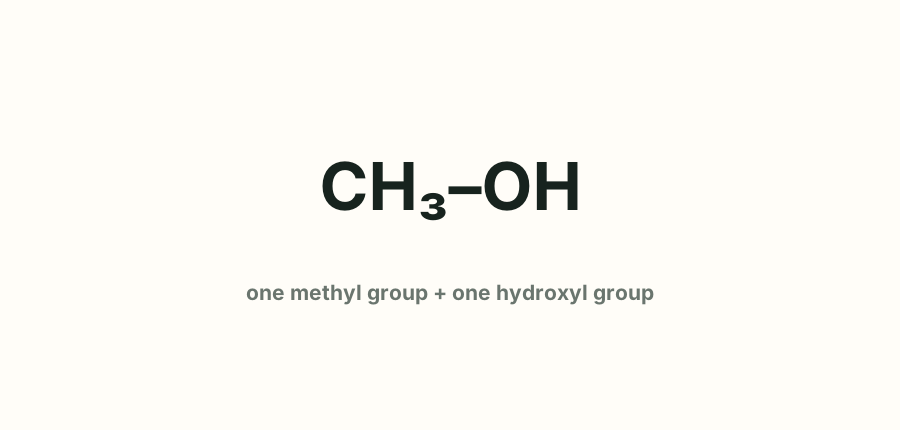
Methanol is CH₃OH, the simplest alcohol. One carbon is bonded to three hydrogens and to a hydroxyl group, giving the molecule a small hydrocarbon region and a strongly polar O–H end.
The molecular formula CH₄O hides connectivity. Writing CH₃–OH immediately exposes the hydroxyl functional group.
Both are alcohols because each contains an –OH group attached to a saturated carbon framework.
The O–H bond is polar, and oxygen carries lone-pair electron density that can accept hydrogen bonds.
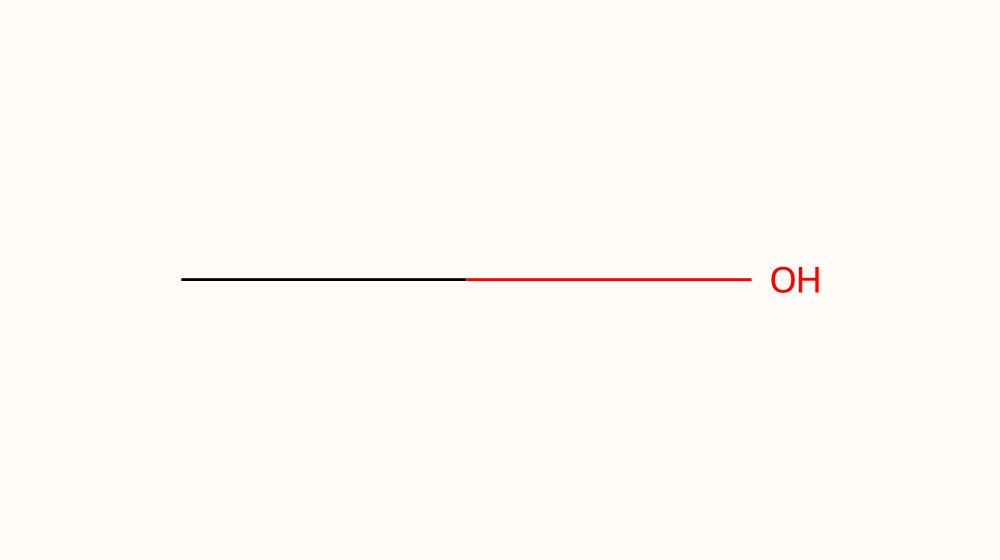
Methanol is small enough that hydrogen bonding strongly affects its bulk properties and water miscibility.
Its O–H hydrogen can act as a donor and oxygen can act as an acceptor, including in interactions with water.
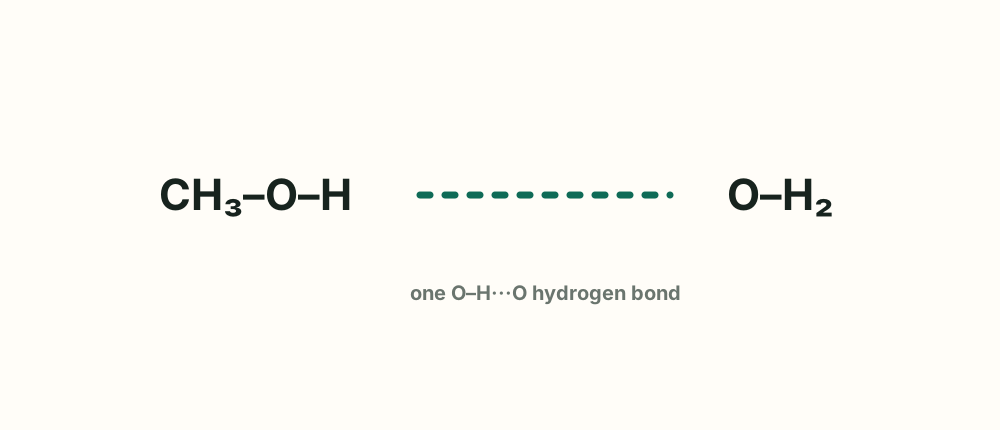
The hydrogen participates as donor; oxygen lone-pair density provides acceptor sites.
| Formula | CH₄O / CH₃OH |
|---|---|
| CAS Registry Number | 67-56-1 |
| PubChem CID | 887 |
No. Molecular formula alone does not encode connectivity.
Its small hydrophobic part and strongly hydrogen-bonding hydroxyl group make water–methanol interactions favorable.
They belong to the same homologous alcohol series, but changing chain length changes physical and chemical behavior.