Acidic site
The proton is transferred from oxygen.
Deprotonation gives nitrate; nitrogen itself is not the proton donor.
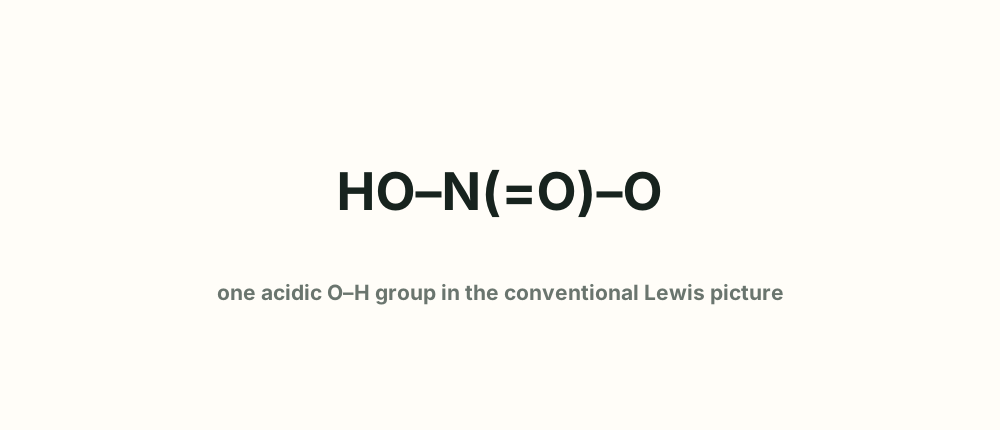
Nitric acid is the molecular compound HNO₃. It contains one acidic O–H group attached to a nitrogen–oxygen framework. In dilute water, proton transfer to the solvent is essentially complete.
A condensed formula shows the proton-bearing oxygen before introducing detailed resonance bookkeeping.
Deprotonation gives nitrate; nitrogen itself is not the proton donor.
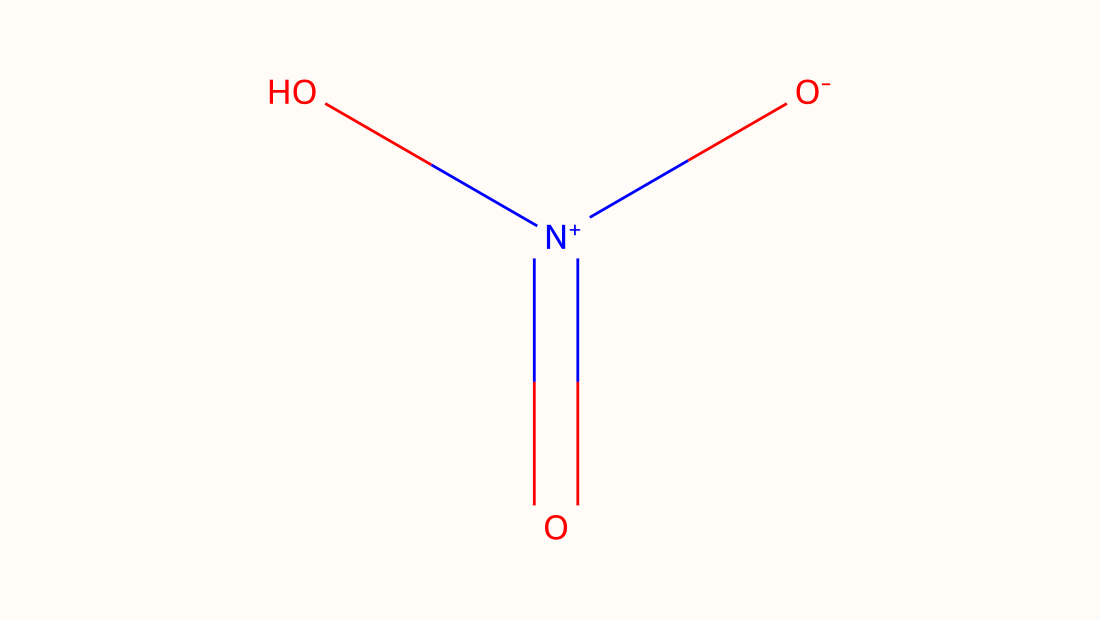
Formal charges help satisfy electron-counting rules. They should not be read as a complete map of real electron density.
No oxygen is permanently the unique “double-bond oxygen”.
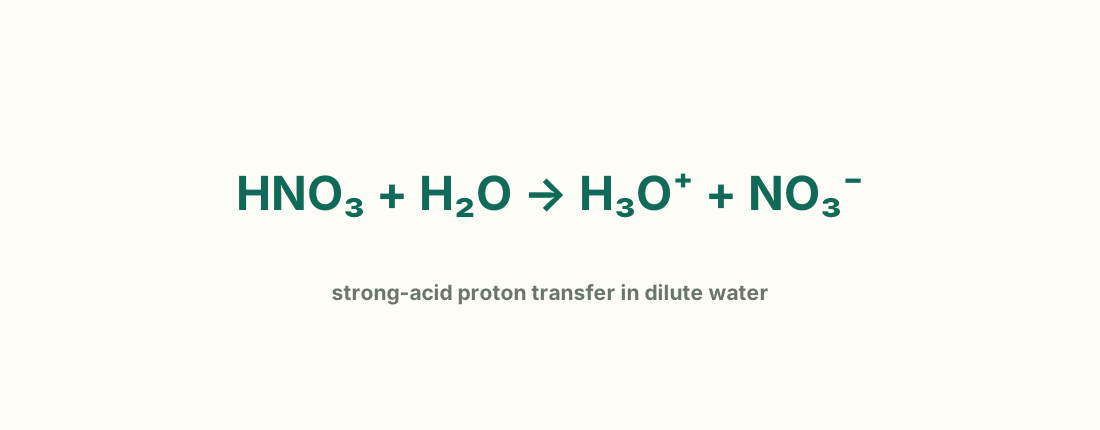
Proton transfer to water forms hydronium and nitrate. Strength describes extent of ionization, not concentration.
A strong acid can be dilute; a weak acid can be concentrated.
| Formula | HNO₃ |
|---|---|
| CAS Registry Number | 7697-37-2 |
| PubChem CID | 944 |
That is one Lewis contributor. The real nitrate ion is resonance-delocalized.
No. Solvation and speciation change with concentration.
Nitrogen is in a high oxidation state, so redox chemistry can accompany acid chemistry depending on conditions.