Mendeleev
Mendeleev / Compounds / Nitrogen dioxide
Molecular radical · nitrogen oxide

Nitrogen dioxide

NO₂

Nitrogen dioxide is NO₂, a bent molecular radical with an odd number of valence electrons. One electron remains unpaired, which changes both magnetic behavior and reactivity.

Equilibrium context: NO₂ can reversibly dimerize to N₂O₄, so a gas sample can contain both species.
Essentials

NO₂ is bent and has one unpaired electron.

The dot represents an unpaired electron; the angle belongs in the detailed view, not the beginner view.
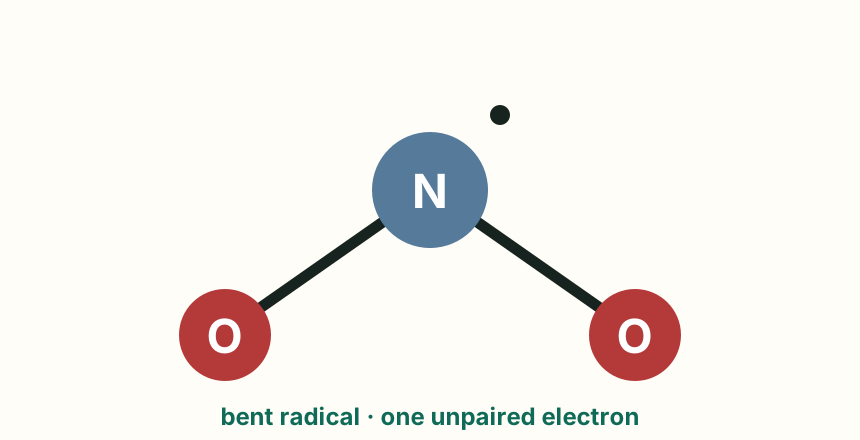
Simple bent nitrogen dioxide radical with one unpaired electron dot
Beginner view: bent shape + one unpaired electron.
Radical

An odd electron count prevents a conventional closed-shell structure.

NO₂ is therefore paramagnetic.

Detail

The gas-phase O–N–O angle is about 134.1°.

NIST experimental geometry gives an angle close to 134.1°, clearly bent but more open than 120°.
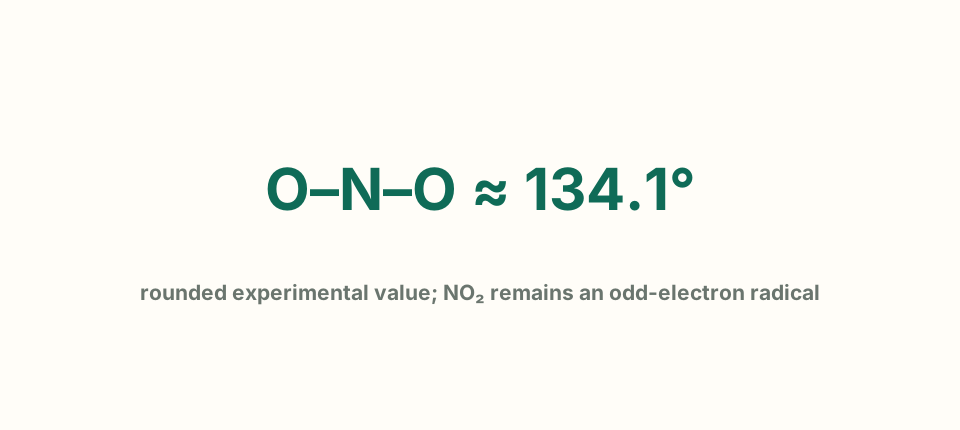
Nitrogen dioxide O-N-O angle approximately 134.1 degrees
Detailed view: rounded experimental gas-phase angle.
Odd electron

Do not force an octet-only closed-shell picture onto neutral NO₂.

The unpaired electron is part of the identity of the radical.

Read the formula

NO2 is a compact statement of composition.

Subscripts count atoms in the chemical molecule. Atom percentages and mass percentages answer different questions because the constituent elements have different atomic masses.

1 Nnitrogen atom
2 Ooxygen atoms

Percentages are calculated from standard relative atomic masses and rounded for display.

Understand

Two NO₂ radicals can pair to form N₂O₄.

Dimerization pairs odd electrons and forms a new N–N bond. Temperature and pressure shift the equilibrium.
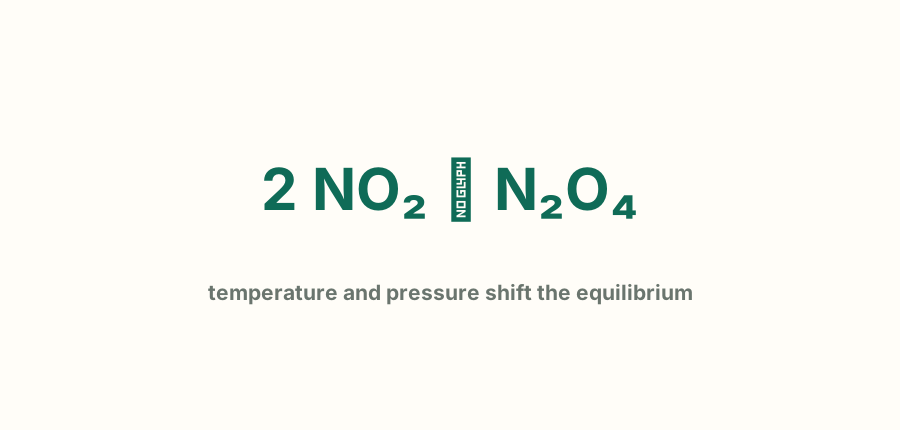
Two nitrogen dioxide in equilibrium with dinitrogen tetroxide
Two distinct molecular species are involved.
Dynamic composition

A sample labeled NO₂ can contain N₂O₄.

Equilibrium composition changes with conditions.

Reference identifiers

Names and identifiers that pin down the chemical identity.

FormulaNO₂
CAS Registry Number10102-44-0
PubChem CID3032552
Advanced

Push past the first model without losing the simple picture.

Why is NO₂ a radical?

Neutral NO₂ has an odd total valence-electron count.

Is 134.1° exact?

No. It is a rounded experimental gas-phase value.

Why does dimerization occur?

Pairing the odd electrons while forming an N–N bond can stabilize the system under suitable conditions.

Constituent elements

Connect the compound back to the periodic table.