Diprotic
Two acidic protons can be removed stepwise.
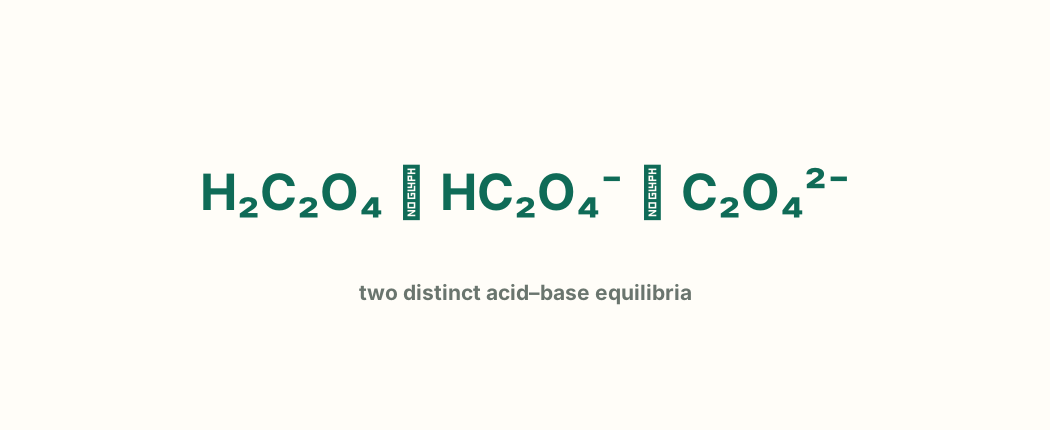
The second deprotonation starts from an already negatively charged hydrogen oxalate ion.
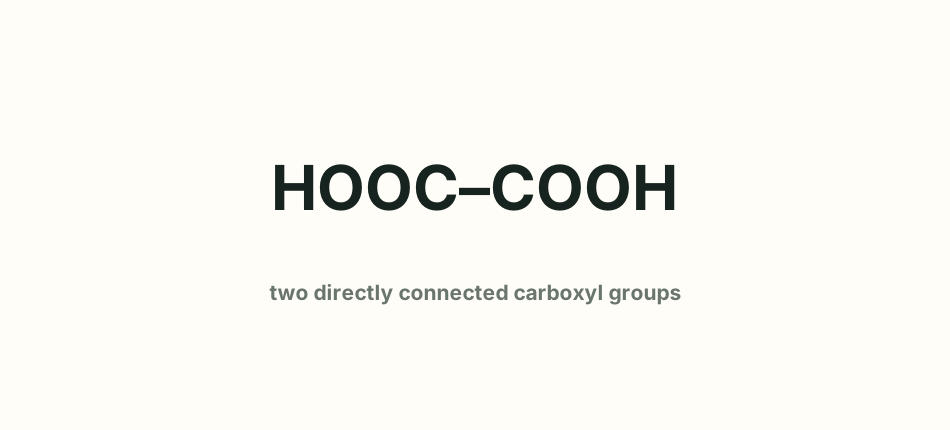
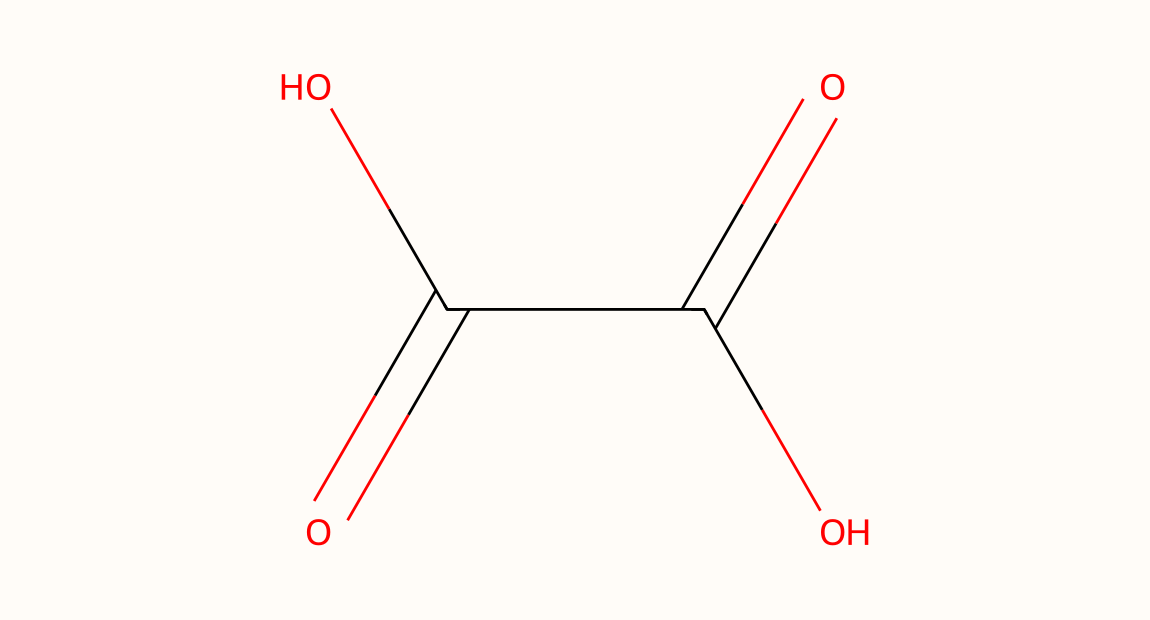
Oxalic acid is C₂H₂O₄, the simplest dicarboxylic acid. Its two carboxyl groups are directly bonded through their carbon atoms, giving HOOC–COOH.
The compact HOOC–COOH structure shows two carboxylic acid groups and no hydrocarbon spacer between them.
The second deprotonation starts from an already negatively charged hydrogen oxalate ion.
Each carboxyl group has its own carbonyl and hydroxyl oxygen in the neutral acid. Electron distribution changes after deprotonation.
Its oxygen donor sites make oxalate important in coordination and precipitation chemistry.
The acid first forms hydrogen oxalate, then oxalate. The two equilibria are not identical because charge and solvation change after the first proton is removed.
That behavior follows from the dianion's charge and coordination geometry, not simply from the presence of oxygen atoms.
| Formula | C₂H₂O₄ / (COOH)₂ |
|---|---|
| CAS Registry Number | 144-62-7 |
| PubChem CID | 971 |
No. The dihydrate includes two waters of crystallization per oxalic-acid unit.
No. The second begins from a negatively charged ion and is less favorable.
Its geometry and delocalized carboxylate groups can provide multiple donor sites to a metal center.