Phenol ≠ alcohol
Direct attachment to the aromatic carbon changes the chemistry.
The oxygen lone pair interacts with the ring π system.
Phenol is C₆H₅OH: a hydroxyl group bonded directly to an aromatic benzene ring. That direct ring–OH connection changes both acidity and electron distribution compared with an ordinary aliphatic alcohol.
That single connectivity fact distinguishes phenol from benzyl alcohol, where –CH₂OH is attached to the ring instead.
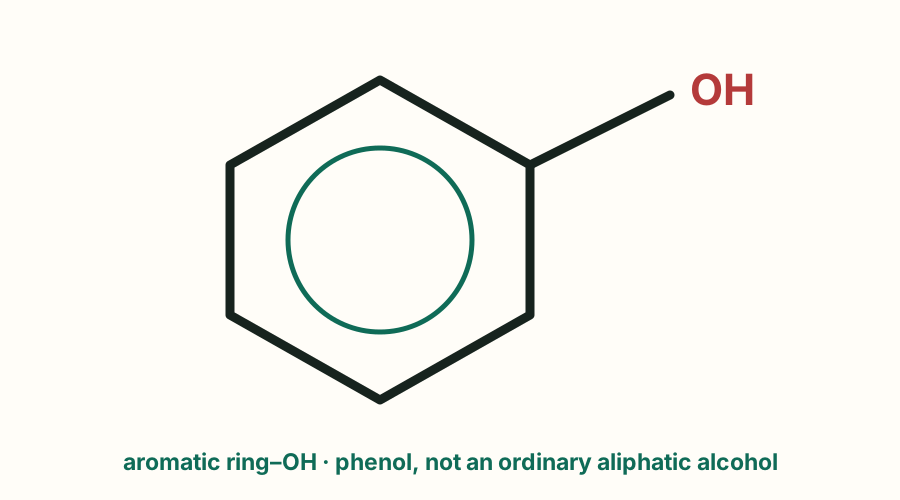
The oxygen lone pair interacts with the ring π system.
The O–H bond is polar, and the oxygen is electronically conjugated with the aromatic ring. This affects both substitution patterns and acidity.
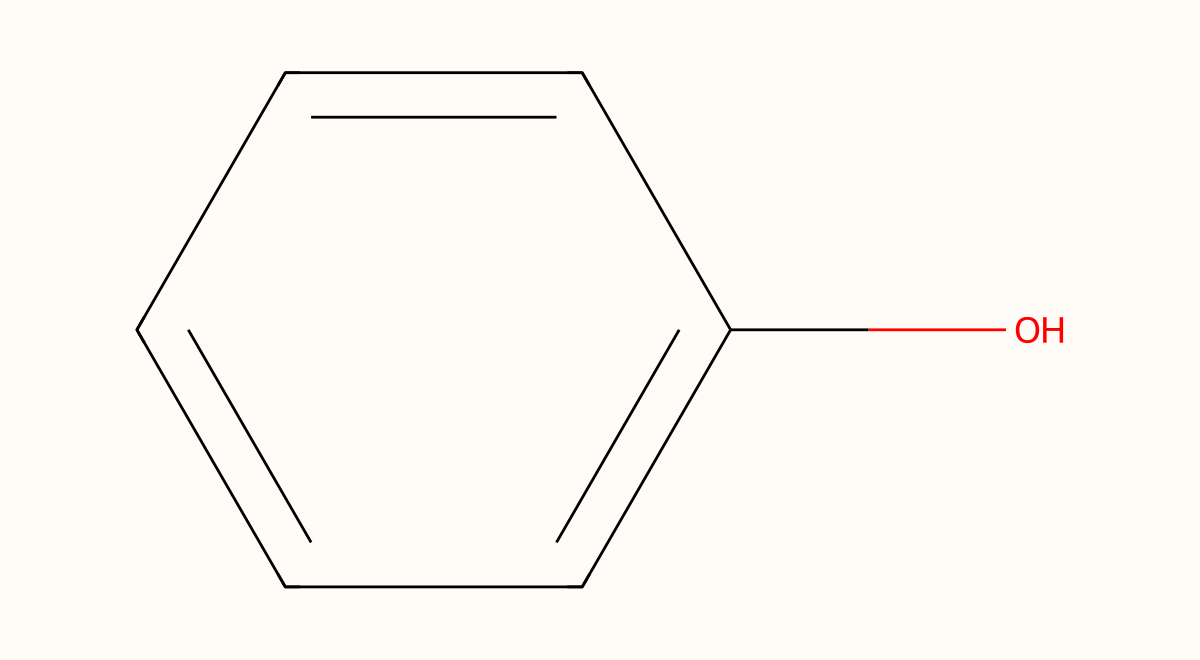
Phenol cannot be understood as benzene and water fragments merely placed next to one another.
Removing the O–H proton gives phenoxide. Its negative charge can delocalize into the aromatic system, helping explain why phenol is more acidic than typical aliphatic alcohols.
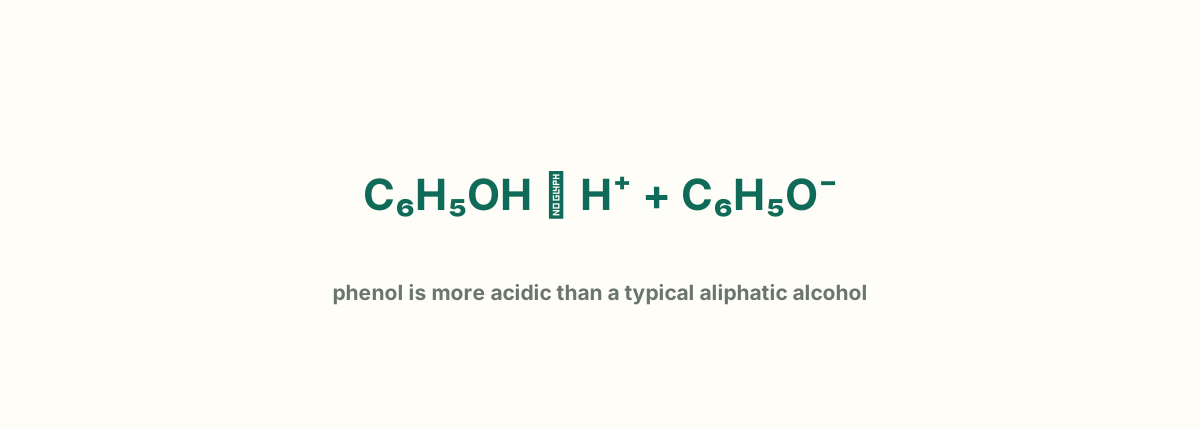
Phenol still ionizes only partially in ordinary aqueous conditions.
| Formula | C₆H₆O / C₆H₅OH |
|---|---|
| CAS Registry Number | 108-95-2 |
| PubChem CID | 996 |
The conjugate base phenoxide is resonance-stabilized, whereas ethoxide lacks comparable aromatic delocalization.
The ring and oxygen interact by conjugation, but no single resonance drawing is the whole electron-density picture.
No. Other isomers with the same formula exist; connectivity matters.