Mendeleev
Mendeleev / Compounds / Phosphoric acid
Molecular compound · triprotic oxoacid

Phosphoric acid

H₃PO₄

Phosphoric acid is H₃PO₄. Three O–H groups can lose protons stepwise, generating dihydrogen phosphate, hydrogen phosphate and phosphate.

Do not flatten the equilibria: three acidic hydrogens does not mean three equally strong proton transfers.
Essentials

Three P–OH groups make the acid chemistry visible.

The conventional O=P(OH)₃ drawing is a useful first model because it shows the three proton-bearing oxygen atoms.
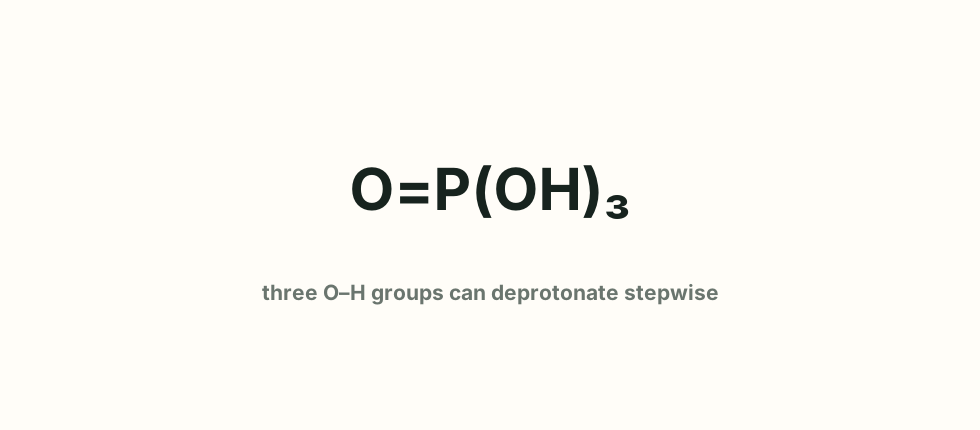
Condensed phosphoric acid structure O=P(OH)3
Beginner view: three O–H groups, three possible deprotonation steps.
Triprotic

Each proton loss changes the ion.

The next proton therefore sits in a different electrostatic environment.

Detail

The reference 2D structure fixes connectivity.

The familiar P=O / P–OH Lewis picture is useful bookkeeping; the real electronic structure is more delocalized than one rigid bond-order cartoon.
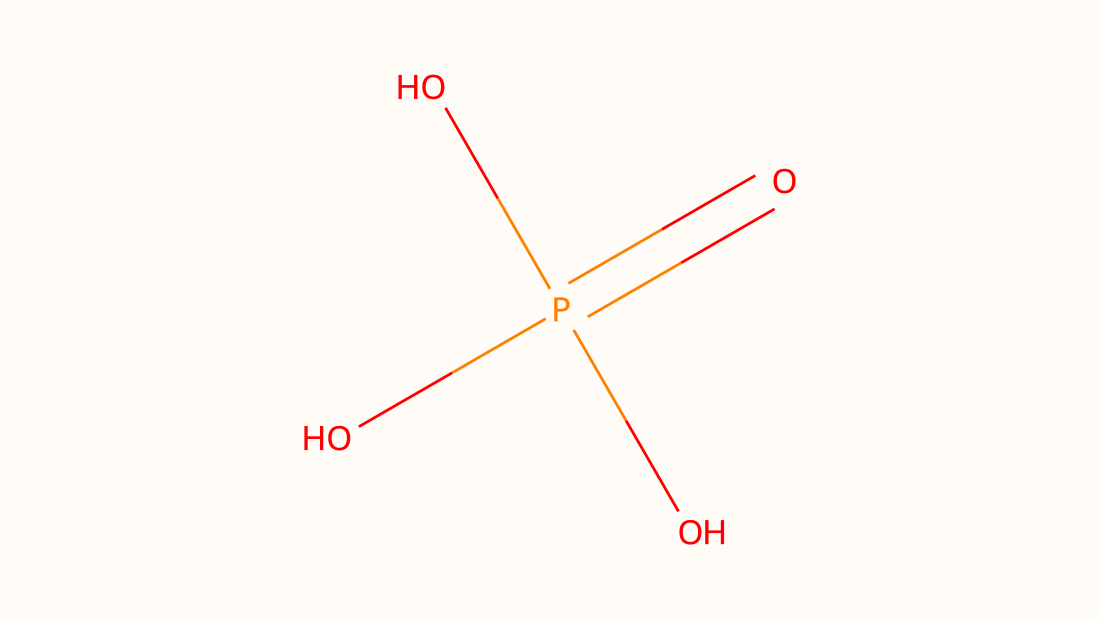
Source-derived two-dimensional structure of phosphoric acid
Reference connectivity around phosphorus.
Phosphate family

Deprotonation changes charge while retaining the P–O framework.

Think of the species as neighboring protonation states.

Read the formula

H3PO4 is a compact statement of composition.

Subscripts count atoms in the chemical molecule. Atom percentages and mass percentages answer different questions because the constituent elements have different atomic masses.

3 Hhydrogen atoms
1 Pphosphorus atom
4 Ooxygen atoms

Percentages are calculated from standard relative atomic masses and rounded for display.

Understand

Phosphate speciation changes strongly with pH.

H₃PO₄, H₂PO₄⁻, HPO₄²⁻ and PO₄³⁻ are connected by three distinct equilibria.
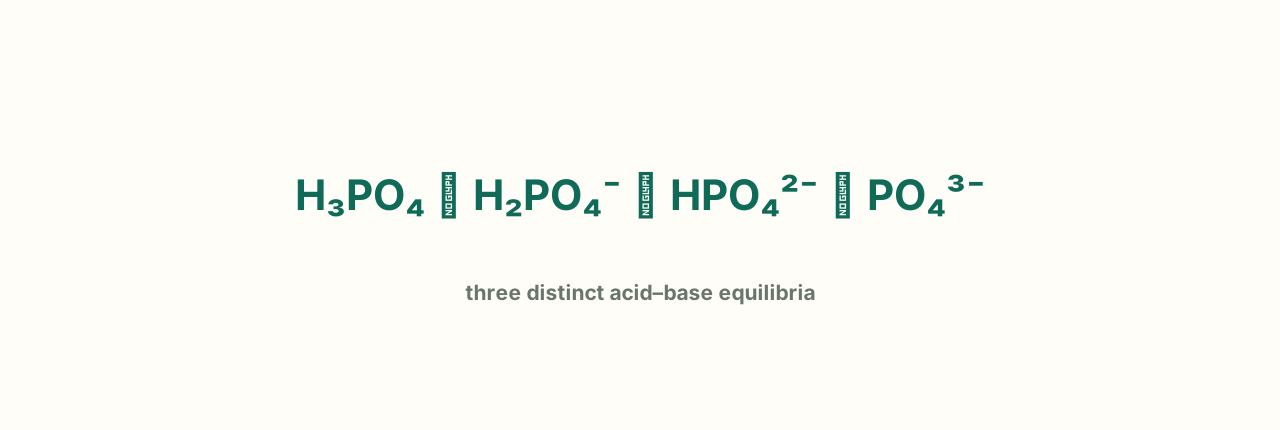
Three phosphoric-acid protonation states to phosphate
Each step removes one proton.
Buffers

Neighboring phosphate species form useful buffer pairs.

The dominant pair depends on pH.

Reference identifiers

Names and identifiers that pin down the chemical identity.

FormulaH₃PO₄
CAS Registry Number7664-38-2
PubChem CID1004
Advanced

Push past the first model without losing the simple picture.

Are all three protons equally acidic?

No. Successive deprotonations are progressively less favorable.

Is phosphate always PO₄³⁻ in water?

No. Protonated phosphate species dominate across many ordinary pH ranges.

Is O=P(OH)₃ the complete bonding description?

No. It is a Lewis representation, not a wavefunction-level description.

Constituent elements

Connect the compound back to the periodic table.