Substituent
The CH₃ group is part of the same molecule.
It is not a methane molecule attached by an intermolecular force.
Toluene is C₆H₅CH₃, also called methylbenzene. It keeps the aromatic benzene ring but replaces one ring hydrogen with a methyl group.
The ring remains aromatic; one hydrogen is replaced by CH₃. This small substitution changes molecular formula, mass and reactivity.
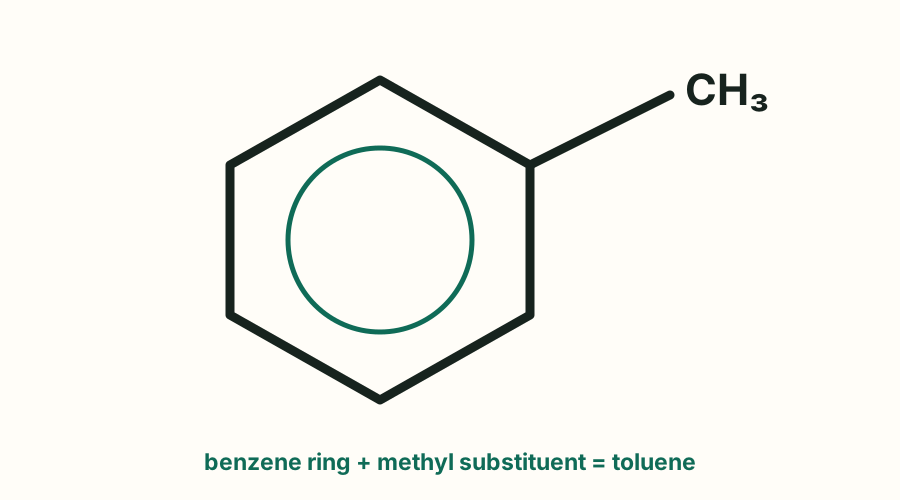
It is not a methane molecule attached by an intermolecular force.
The aromatic ring remains planar, while the methyl group can rotate around the bond connecting it to the ring.
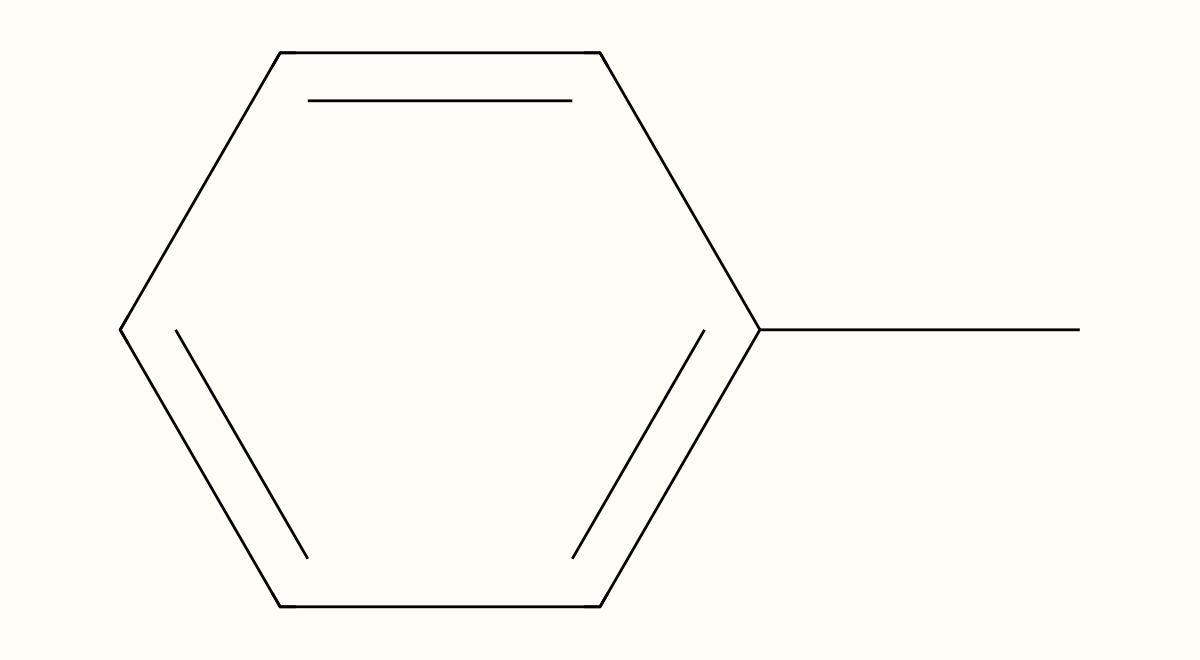
The ring is planar, but the methyl group can rotate about the ring–CH₃ bond.
Benzene and toluene share the same aromatic ring framework, but the methyl substituent changes electron distribution and creates new side-chain chemistry.
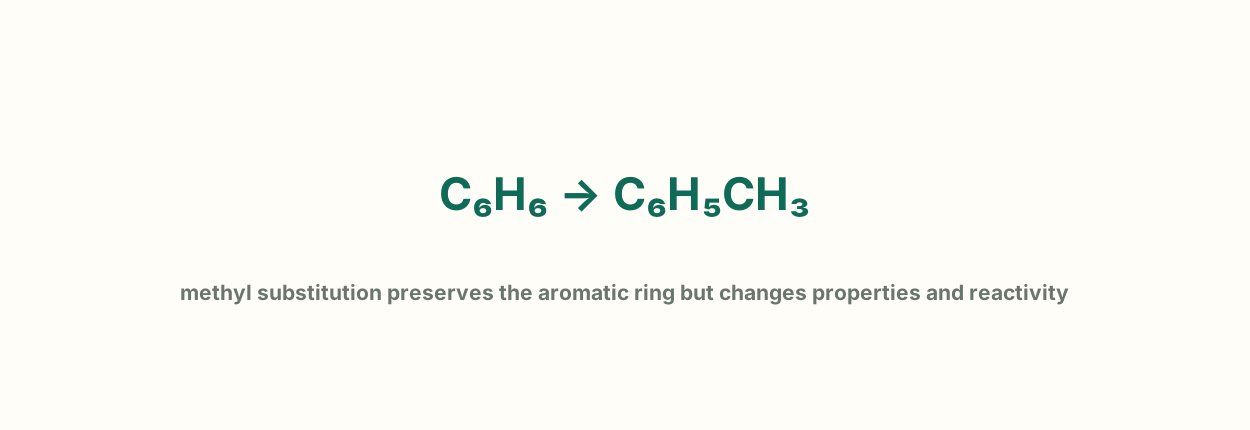
Substitution is one of the main ways organic chemistry builds families of aromatic molecules.
| Formula | C₇H₈ / C₆H₅CH₃ |
|---|---|
| CAS Registry Number | 108-88-3 |
| PubChem CID | 1140 |
No. The methyl carbon sits outside the six-membered aromatic ring.
Yes. The six-membered ring still contains a delocalized six-π-electron aromatic system.
Toluene lacks phenol's polar O–H group and has no strong hydrogen-bonding site.