Connectivity
Both nitrogens attach directly to the carbonyl carbon.
That creates amide-like electronic coupling.
Urea is CH₄N₂O with structure H₂N–C(=O)–NH₂. Both nitrogen atoms are electronically coupled to the carbonyl group.
The condensed structure immediately shows why urea is not simply an amine plus a carbonyl placed nearby.
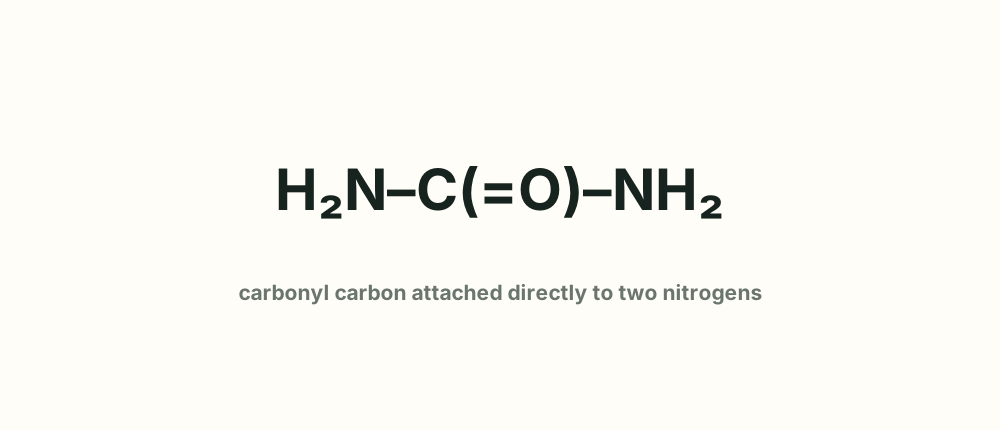
That creates amide-like electronic coupling.
Nitrogen lone-pair donation into the carbonyl system gives partial C–N double-bond character and favors planarity.
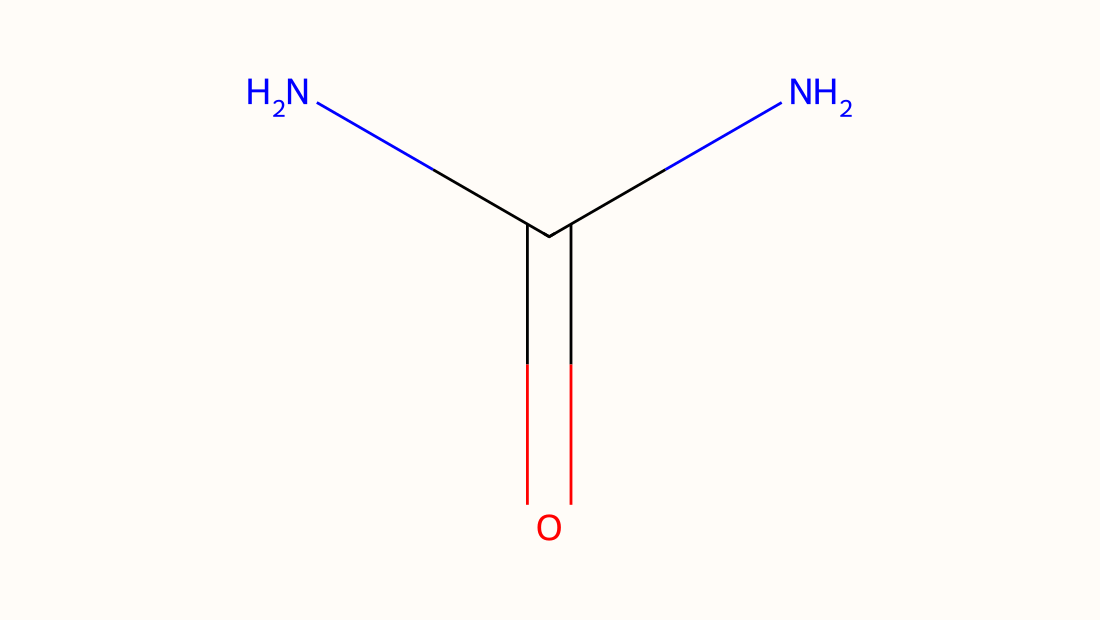
This is an intramolecular electronic effect.
N–H groups can donate hydrogen bonds and the carbonyl oxygen can accept them.

Keeping those levels separate prevents conceptual confusion.
| Formula | CH₄N₂O |
|---|---|
| CAS Registry Number | 57-13-6 |
| PubChem CID | 1176 |
Not completely; resonance gives partial double-bond character.
Much less at nitrogen because lone-pair density is delocalized into the carbonyl.
No. One is a compound; the other is a mixture.