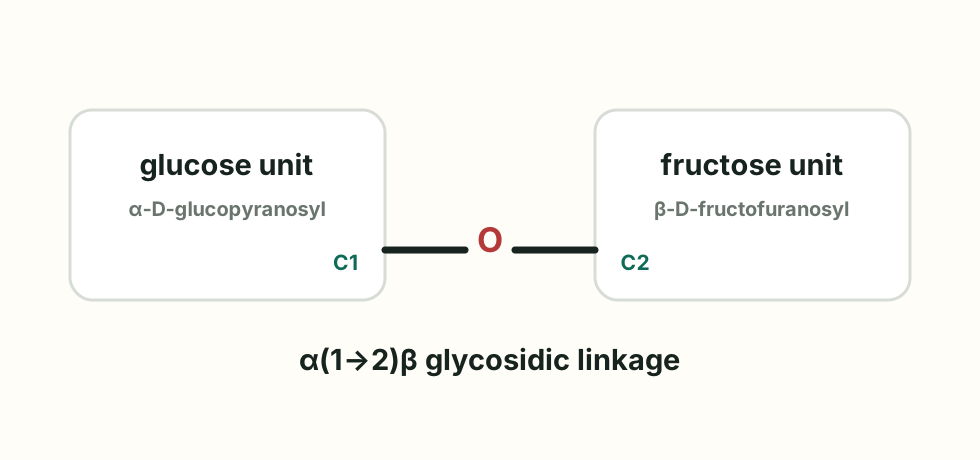
Sucrose is the chemical compound that makes up ordinary table sugar. It is a disaccharide built from a glucose unit and a fructose unit joined by a glycosidic bond. The linkage connects the anomeric carbon of glucose to the anomeric carbon of fructose.
Everyday distinction: “sugar” is a broad chemical and food term. Sucrose is table sugar, while glucose and fructose are different sugars with different structures.
Essentials
Sucrose contains glucose and fructose units — but it is a new compound.
A glycosidic linkage joins the two monosaccharide residues. Once linked, the atoms belong to one sucrose molecule; sucrose is not a physical mixture of free glucose and free fructose molecules.
The linkage is α-D-glucopyranosyl-(1→2)-β-D-fructofuranoside: C1 of the glucose unit is linked through oxygen to C2 of the fructose unit.
Why the formula changes
Linking two hexoses removes the elements of water in formula bookkeeping
C₆H₁₂O₆ + C₆H₁₂O₆ − H₂O = C₁₂H₂₂O₁₁
This equation is a composition relationship for forming the glycosidic linkage, not a claim that biological sucrose synthesis proceeds as one uncatalysed elementary dehydration step.
Read the formula
C₁₂H₂₂O₁₁ is a compact statement of composition.
A sucrose molecule contains 45 atoms in total. Formula composition alone does not reveal that those atoms are organised into linked glucose-derived and fructose-derived rings.
Percentages by mass use standard atomic-weight values and are rounded for display.
Exact stereochemical structure
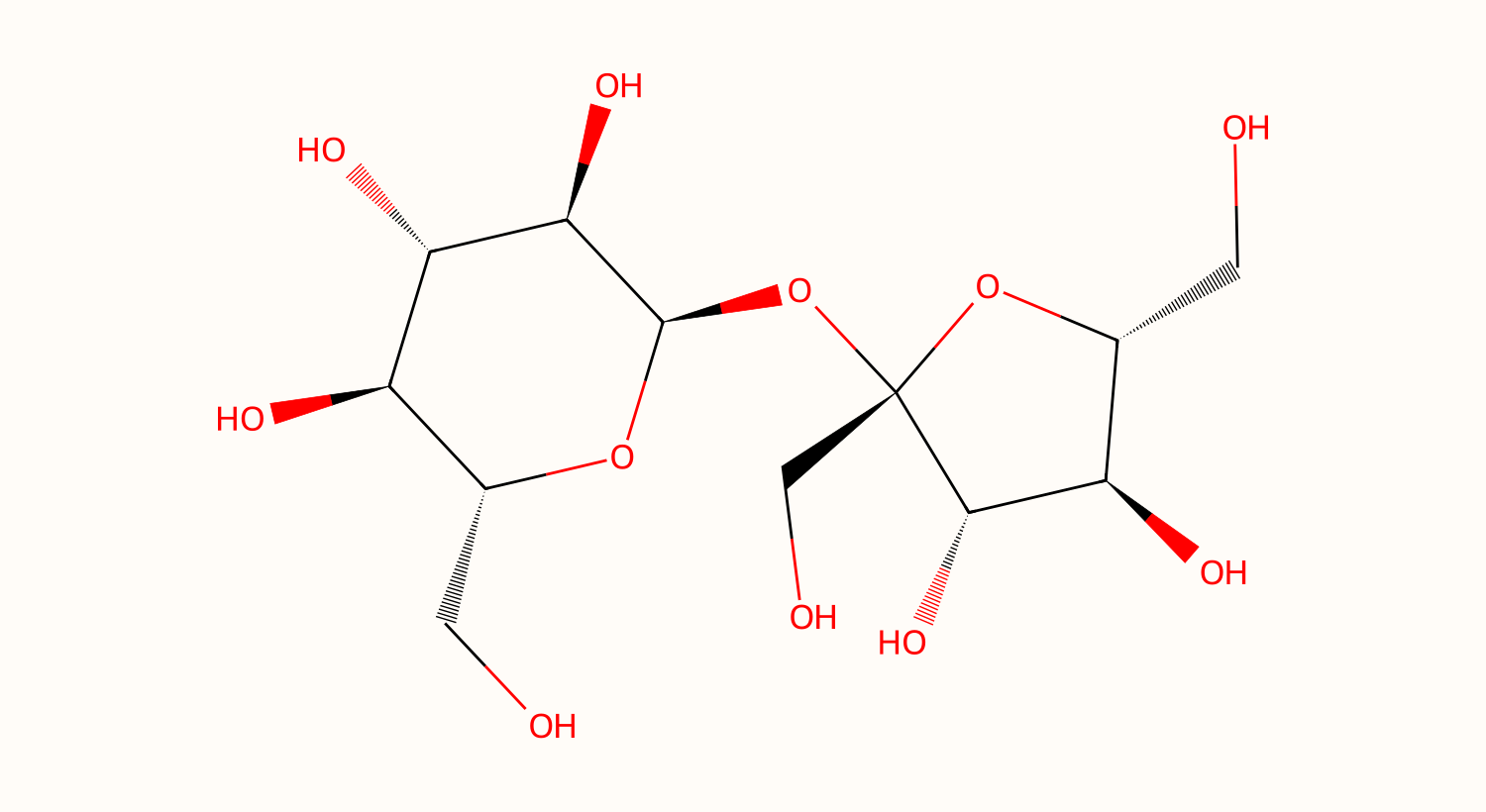
The two rings are connected through both anomeric centres.
This is the structural feature behind one of sucrose's most useful distinctions: sucrose is a nonreducing disaccharide because neither anomeric carbon remains as a free hemiacetal/hemiketal centre that can readily open to the corresponding carbonyl form.
Programmatic 2D depiction generated from the PubChem isomeric structure for sucrose (CID 5988), rather than hand-drawn stereochemistry.
Hydrolysis
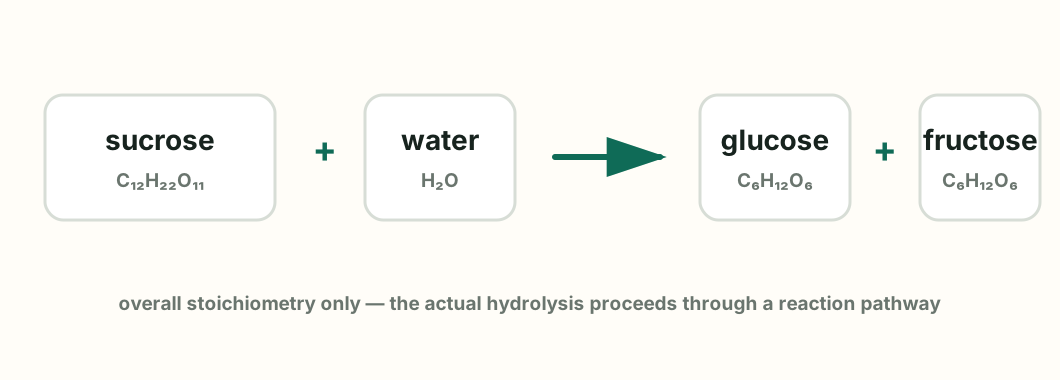
Breaking the glycosidic bond gives glucose and fructose.
Hydrolysis adds the elements of water across the linkage. The process can be catalysed by acid or by enzymes such as sucrase/invertase, depending on context.
sucrose + H₂O → glucose + fructose
This is the overall stoichiometric change, not a detailed reaction mechanism.
Advanced
The anomeric-centre logic explains the chemistry.
Why is sucrose nonreducing?
Its glycosidic bond joins C1 of the glucose residue and C2 of the fructose residue, the anomeric centres of both monosaccharide units. Neither remains as a free hemiacetal or hemiketal that can equilibrate with a free carbonyl form.
Does sucrose undergo mutarotation like glucose?
Not in the same way. Because both anomeric centres are locked in the glycosidic linkage, sucrose does not have a free anomeric hydroxyl that can open and reclose to interconvert α and β anomers of the intact disaccharide.
Is “sugar” a chemical class with one formula?
No. The term covers multiple saccharides. Glucose and fructose are monosaccharides with C₆H₁₂O₆; sucrose is a disaccharide with C₁₂H₂₂O₁₁.
Reference identity
Sucrose as a chemical substance.
Molecular formula
C₁₂H₂₂O₁₁
Molar mass
342.2965 g/mol
CAS Registry Number
57-50-1
PubChem CID
5988
Structural description
α-D-glucopyranosyl-(1→2)-β-D-fructofuranoside
Chemical class
Nonreducing disaccharide
Compare
Three sugars, three different chemical identities.